
Last updated August 26, 2026
Free on-site gate assessment - hinges, posts, and your LiftMaster or Nice gate operator checked before anything is quoted
The assessment is free and the quote is the invoice.

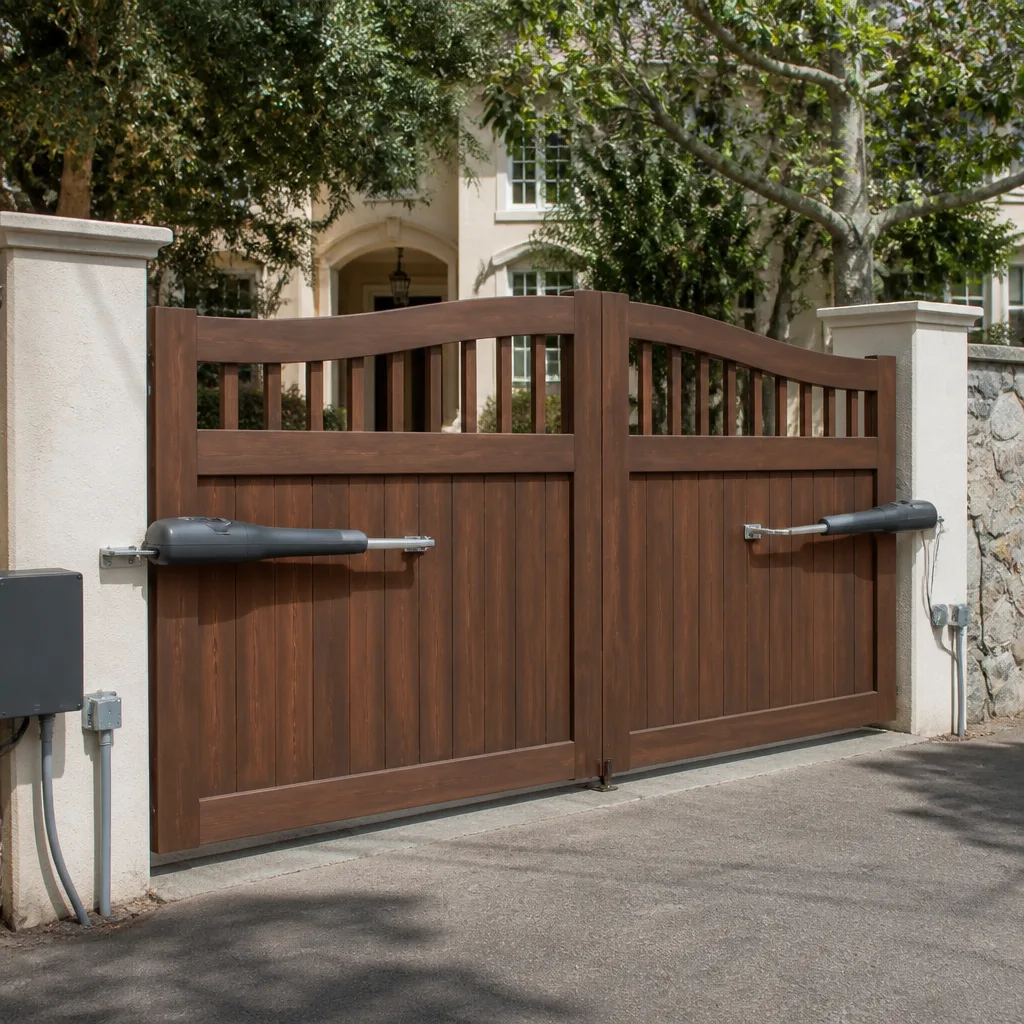
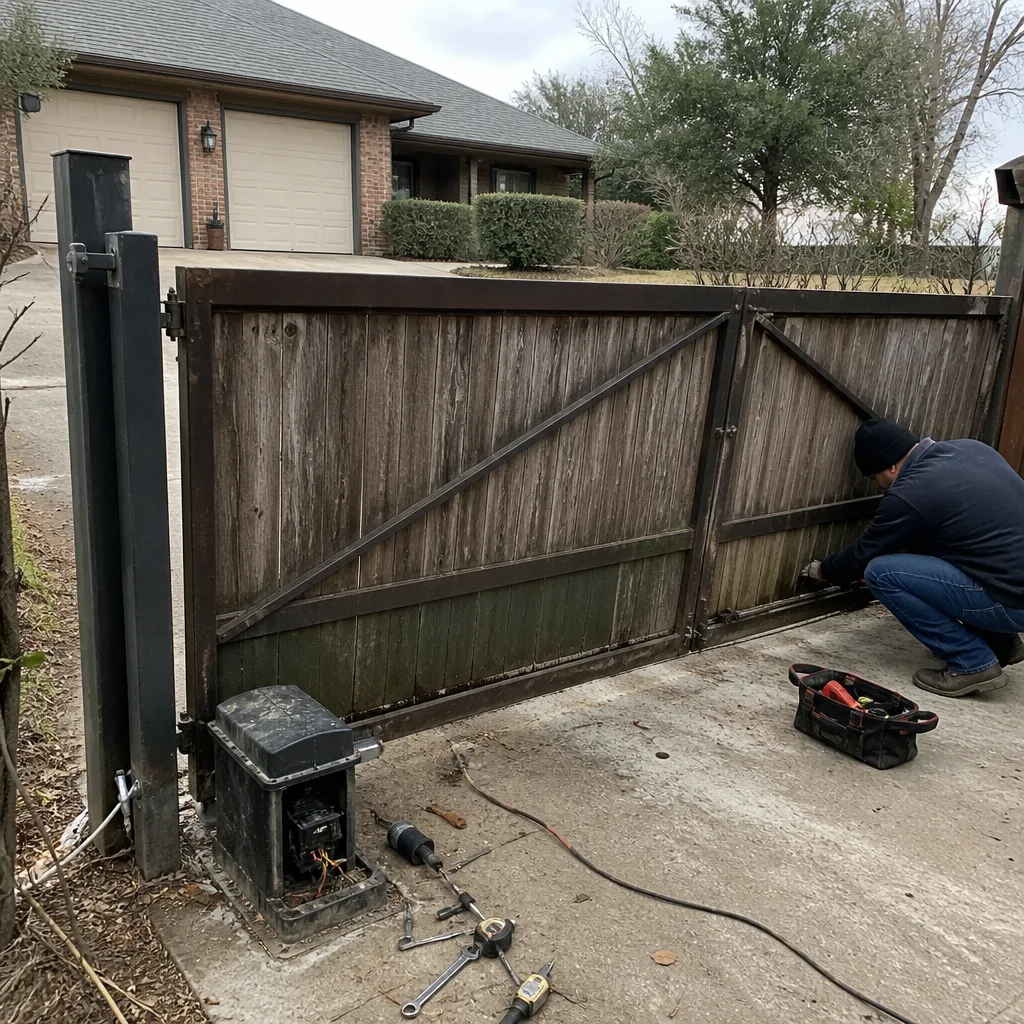 Before
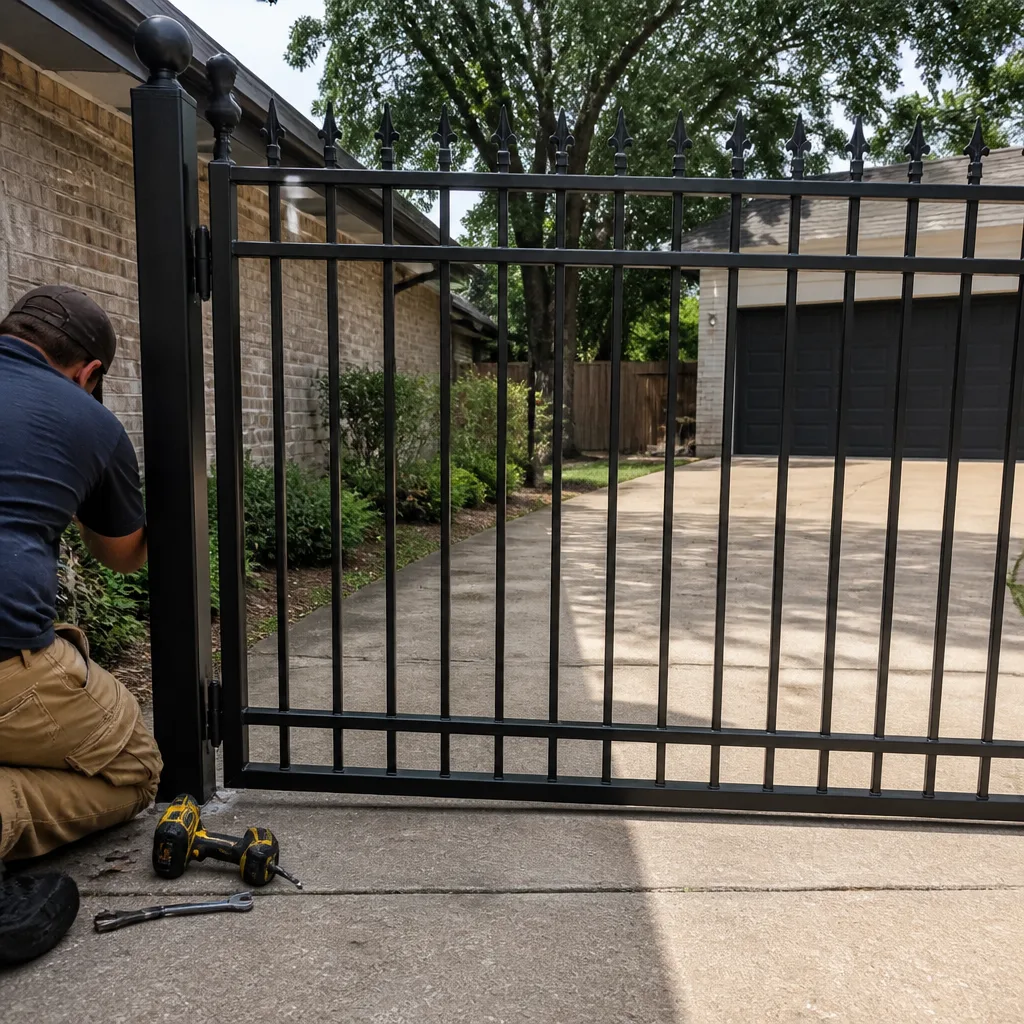 After
After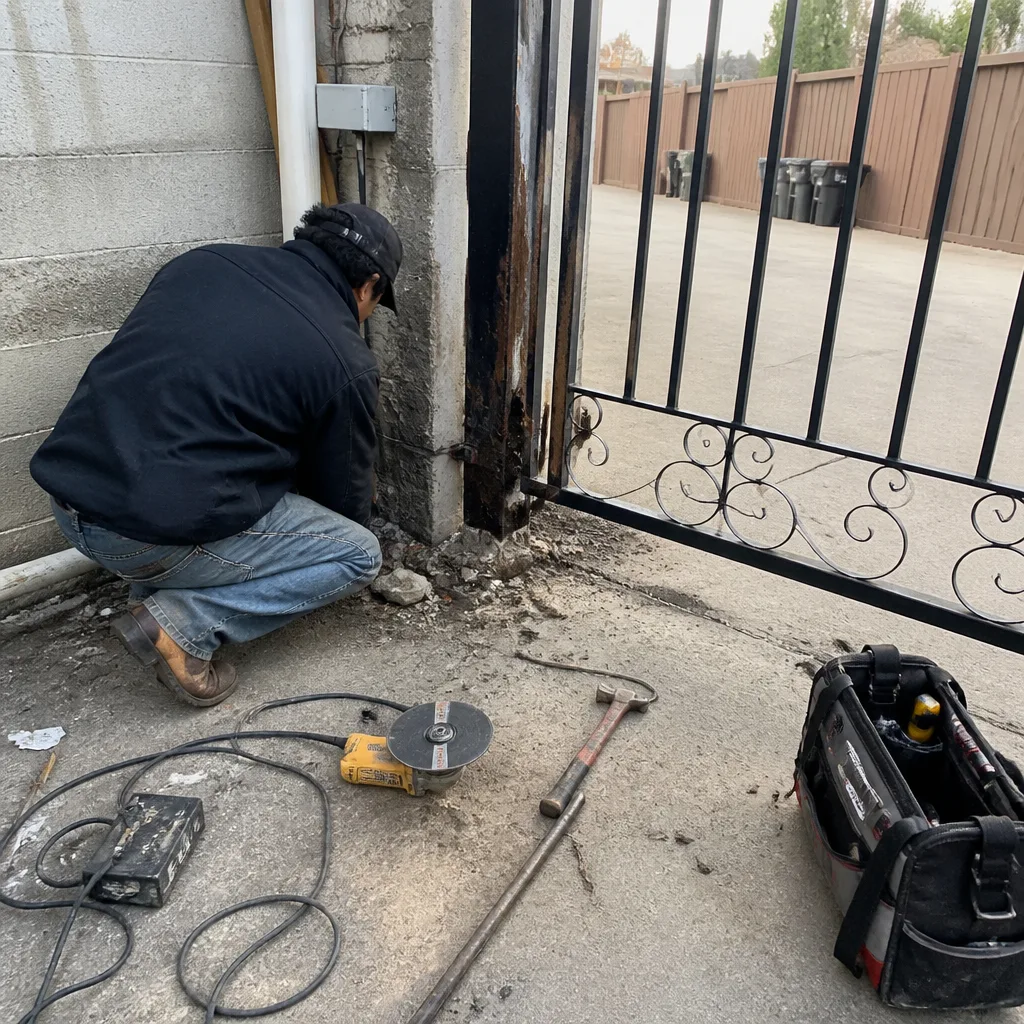 Before
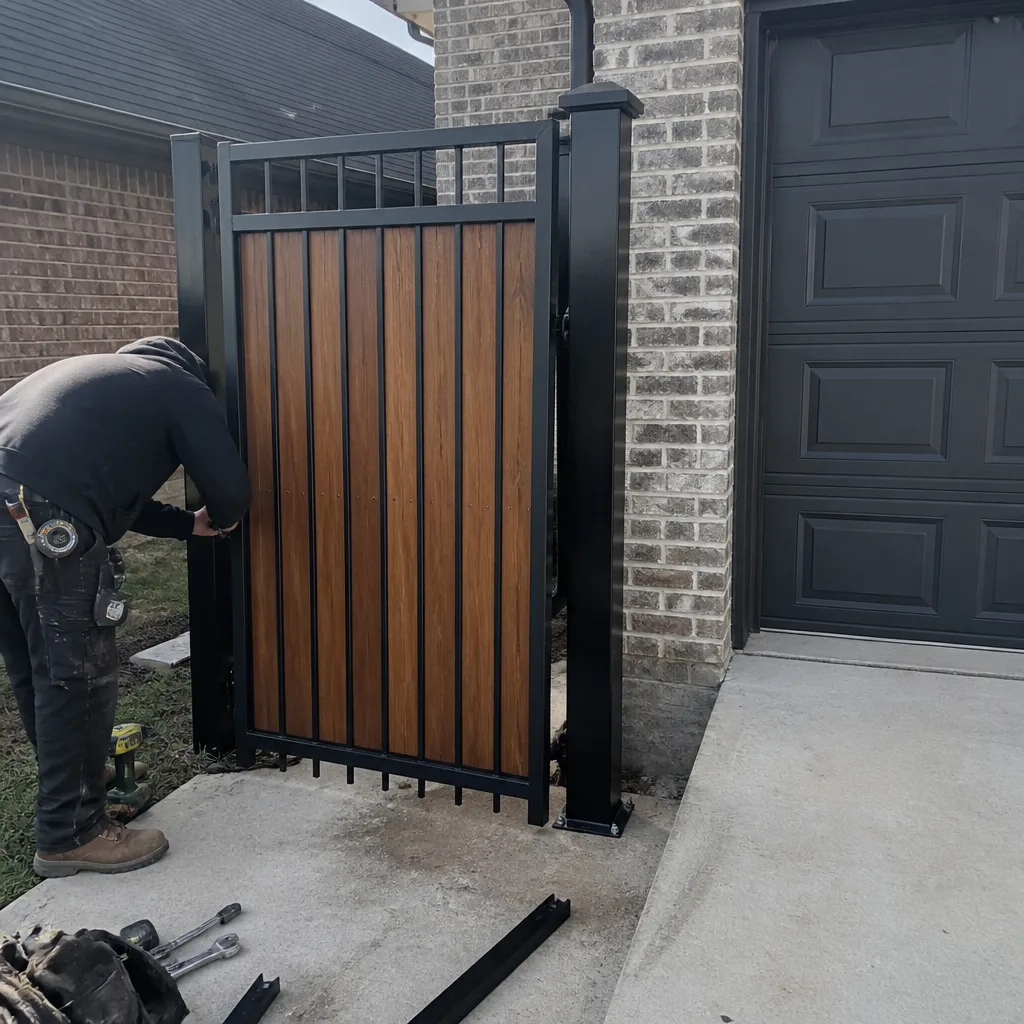 After
After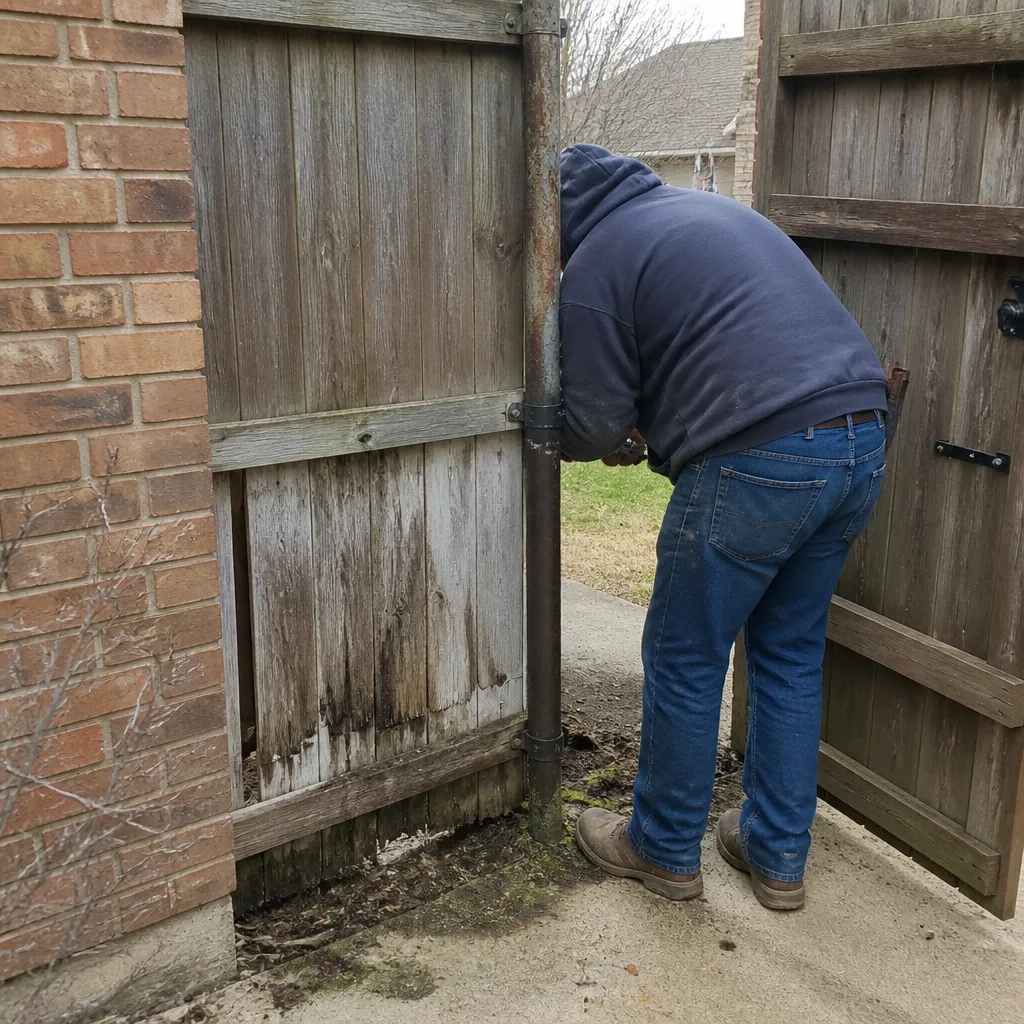 Before
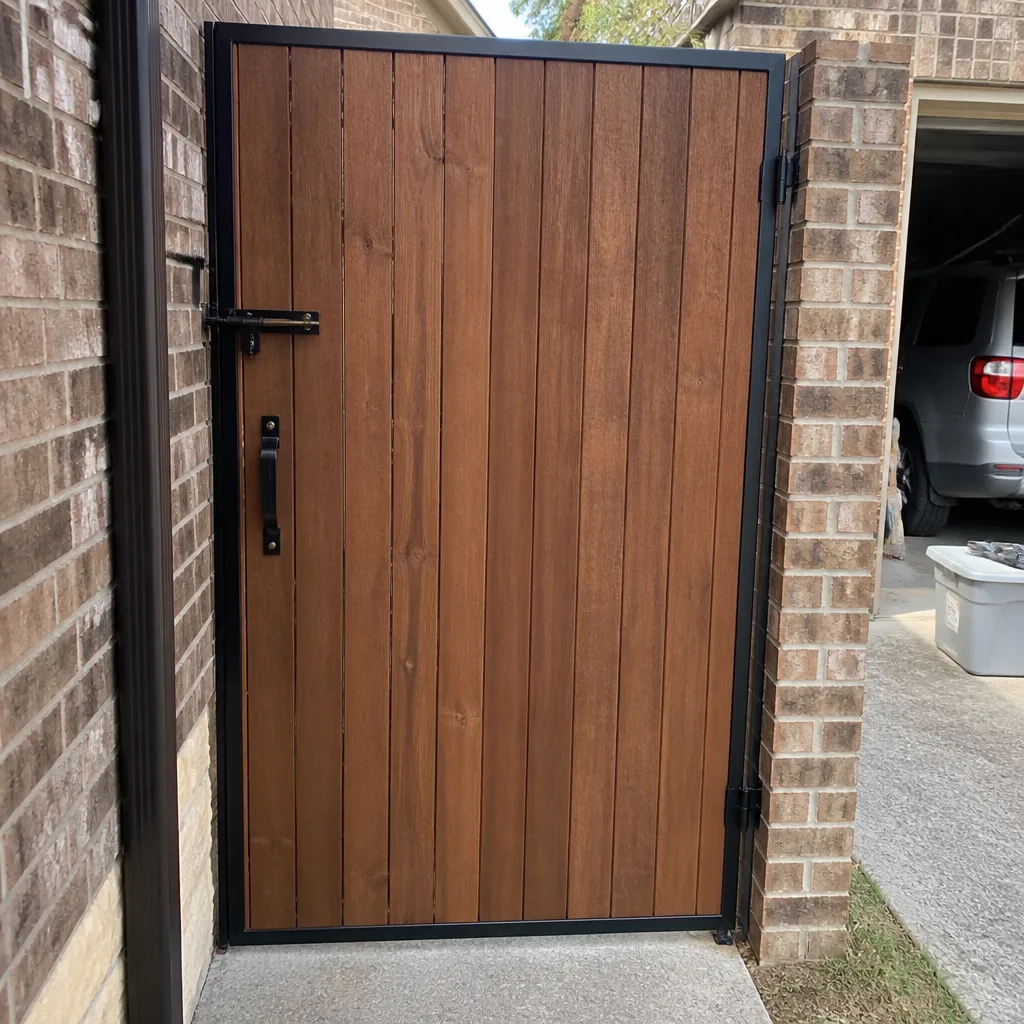 After
AfterSeasonal Gate Repair Care for Denton: Year-Round Homeowner’s Guide
Most seasonal gate guides are written for a generic “four seasons” that have nothing to do with North Texas. They tell you to winterize in November when the real enemy here is what August ground shrink already did to your post footings two months earlier. The truth about Denton is this: summer heat and clay shrink do most of the structural damage, spring storms do the impact damage, and winter is when problems you ignored all year finally announce themselves. This guide maps the maintenance calendar to the actual stress patterns we see on gates in Denton County every week.
Quick Answer
Seasonal gate maintenance in Denton means doing the right task at the right time: inspect post footings and weld points in late September after the clay has fully shrunk, test your manual release and disconnect sequence before spring storm season, re-lube grease-packed rollers every January after freeze-thaw cycles, and treat UV degradation on powder-coat and paint before it becomes structural. Skip the generic winterizing checklist and follow the Denton-specific calendar below.
Table of Contents
- Why Denton’s Climate Is Harder on Gates Than It Looks
- Late September: The Structural Post Inspection (Do This, Not Spring)
- Spring Storms and Supercells: Preparing Your Automatic Gate
- Summer UV and Heat: What It Does to Powder-Coat, Paint, and Raw Steel
- January Freeze-Thaw Cycles and the One Re-Lube Task Worth Doing
- The Month-by-Month Task List You’ll Actually Stick To
- Common Mistakes to Avoid
- When to Call a Professional
- Frequently Asked Questions
Why Denton’s Climate Is Harder on Gates Than It Looks
Denton sits on expansive clay soil. If you have lived here longer than one August, you have seen what that clay does to sidewalks, foundations, and fence lines. When the clay dries out in July and August, it shrinks. When it shrinks, whatever is set in it moves. Your gate posts are set in that clay. The panel may look level from ten feet away, but the post has shifted a quarter inch at the footing, and a quarter inch at ground level is an inch and a half at the latch. That is why a gate that closed cleanly in May suddenly drags the ground in September.
We have been fixing gates around Gatewood Fence & Gate home since 2001, and the pattern is consistent across every neighborhood we work in. The calls come in waves: post-shift problems in late summer, storm damage in April and May, frozen roller pins in January. Homeowners who call us in March about a sagging gate are almost always looking at damage that actually happened the previous August. The gate just took six months to get bad enough to notice.
Here is the Denton seasonal stress calendar as we actually see it:
- July through September: clay shrink moves post footings, weld joints crack, cantilever gates bind at the roller trucks
- October through November: first real rains re-expand the clay, posts shift again, and gates that were “fine” suddenly are not
- December through February: freeze-thaw cycles work water into roller bearings and grease-packed housings, causing stiffness and motor strain
- March through June: supercell winds test every hinge, weld, and latch pin, and hail dents panels while debris clogs the gate track
None of this lines up with a generic “seasonal maintenance checklist” written in Michigan. Which is the point of this guide.
Late September: The Structural Post Inspection (Do This, Not Spring)
The single most useful gate inspection you will do all year in Denton happens in late September, after the clay has gone through a full summer shrink cycle. Spring inspections miss the problem because the clay is still wet and swollen from winter rain, and the posts look straight. Wait until the ground has been dry for six to eight weeks. That is when a post with inadequate footing shows its true position.
Here is the late-September inspection sequence we run on every Gate Repair in Denton call:
- Stand back fifteen feet and sight down the gate line. A post that was plumb in April and is leaning two degrees in September has a footing problem, not a hinge problem.
- Walk to the hinge post and press the gate through its full swing. Listen for a change in resistance. A gate that binds only in the last third of its travel usually has a shifted post or a sagging panel.
- Check the gap between the latch and the latch post. If the gap narrows toward the bottom, the panel has racked or the post has settled.
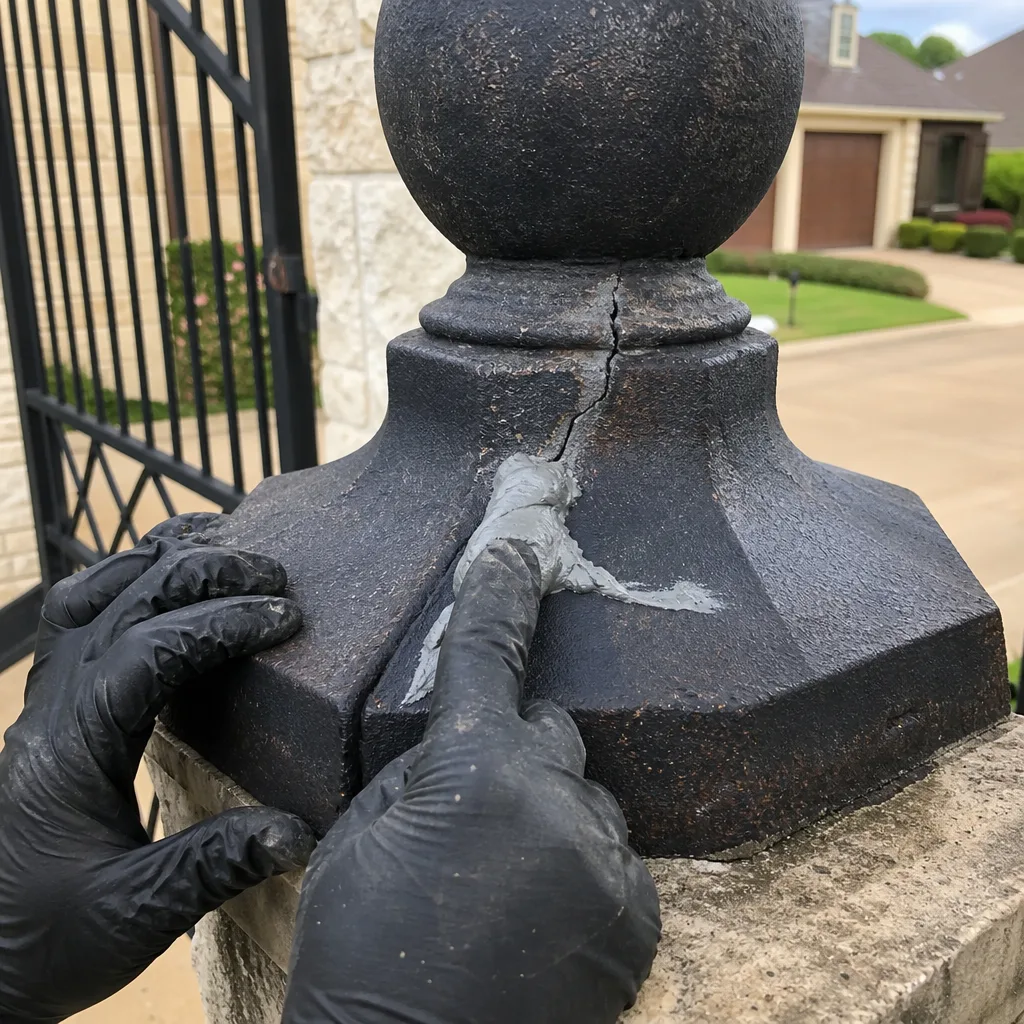
- Look at the weld points where the panel frame meets the hinge plates. Clay shrink cracks welds because the post moves while the panel stays put. A hairline crack at the weld is the earliest sign of a gate that will fail.
- For cantilever gates, check the roller trucks. When the posts shift, the rollers eat the track. You will see shiny wear marks or flat spots on the rollers themselves.
A gate sags in the hinge post, not in the middle. Fix the panel without the post and you will fix it twice. That is not a slogan. It is the most common avoidable repair we see, and it usually comes from a previous repair that patched the symptom.
If you find post movement in September, do not wait until spring. A shifted post under a loaded gate gets worse every time the gate cycles, and a cracked weld under load is a failure waiting for the first hard gust of March. Our Gate Repair services include on-site welding, so the fix happens in your driveway without hauling the gate to a shop. The 90-Day Done Right Promise is in writing on every job, which means if the post shifts again inside ninety days, we come back and make it right. No runaround.
Spring Storms and Supercells: Preparing Your Automatic Gate
Denton spring weather is not a metaphor. Supercells produce straight-line winds that hit gates sideways, and a gate motor that is fighting a bent track or a bound roller will burn out in a single storm event. The best storm preparation for an automatic gate is not a checklist of last-minute yard work. It is knowing two things before the storm shows up: where your manual release is, and how to disconnect the motor under pressure.
Here is the storm-prep sequence we recommend for every automatic gate in Denton County:
- Test the manual release now, in good weather. Every automatic gate has a disconnect, usually a keyed release or a pull-chord on the motor housing. Brands like Viking, Ghost Controls, DoorKing, and Elite all put the release somewhere different. Find yours and operate it. If you cannot disengage the motor by hand in under a minute, the release needs service before the storm season starts.
- Run the gate through a full cycle and listen. A motor that strains, hums, or hesitates mid-travel needs attention before the winds arrive. Storms do not break motors. They finish off motors that were already struggling.
- Clear the track and the path. Denton storms drop branches and debris. A gate that meets a branch on the track mid-cycle can strip a gear or bend a track section. Clear the swing arc and the track bed before every forecast that includes wind.
- Check the battery backup. If your opener has a backup battery, test it in March. Power outages during supercells are common in Denton, and a gate without a charged backup becomes a locked gate exactly when you need to get a vehicle through.
- Document the position of the limit switches. If the gate gets pushed off its travel by wind, the limit switch settings may need re-syncing after the storm. We see it regularly on DoorKing and Elite operators after high-wind events.
If the gate is damaged in a storm, the immediate question is whether to run the motor at all. Do not run a motor on a gate that has been visibly racked, bent, or knocked off its track. That is how a $200 repair becomes a $700 opener replacement. Disconnect the motor, secure the gate open or closed, and consult DIY vs Professional Gate Repair: The Denton Homeowner’s Decision Guide to decide whether to call someone who can look at the damage before you cycle it again.
For what it is worth, Gate Motor & Opener in Denton runs through our shop constantly in March and April. The calls we get after a storm are almost always from homeowners who had never touched their manual release before they needed it in the dark with the wind blowing. Test it now. It takes two minutes.
Summer UV and Heat: What It Does to Powder-Coat, Paint, and Raw Steel
Denton summers are an endurance event. A hundred degrees is routine, and the sun spends months hammering the south and west faces of every gate in the county. Standing near a metal gate in August, you can feel the heat radiating off it. That heat, combined with UV exposure, breaks down every coating system differently, and knowing which one you have determines what you should do about it.
Powder-coat is the most durable finish you can get on a gate. It is baked on, not sprayed on, and a good powder-coat job holds up for years in North Texas sun. But it is not immortal. After five to eight Denton summers, powder-coat starts to chalk. You will see a white, cloudy film on the surface. That is cosmetic degradation, not structural, and it does not mean the gate is failing. What you want to watch for is peeling at the edges and around welds. Once moisture gets under the powder-coat at a scratch or a chip, rust starts underneath the coating and the finish fails from the inside out. Touch up chips with a catalyzed touch-up product before they spread.
Wet paint ages faster than powder-coat, and most residential gates in Denton that are painted need a scuff-and-recoat every three to five years. The first place paint fails on a gate is the top rail, where rain pools and where the sun hits at its most direct angle. If you see a line of rust blooming along the top rail, the paint is already compromised. Sand it, prime it, and recoat it in the fall, not the summer. Painting a gate in August heat is a waste of material and effort. The paint skins over before it bonds, and you will be doing it again next year.
Raw steel is the one to watch closely. Ornamental steel gates that have never been coated are rare in Denton, but we see them on farm and ranch properties. Raw steel in Denton humidity rusts at the surface quickly, which actually protects it from deeper corrosion if left alone. The real problem is raw steel at the weld joints, where the heat of welding has burned off any mill scale and the metal is exposed. Those welds rust first and rust deep. Clean them with a wire brush and coat them with a rust converter once a year, or they will be the first part of the gate to fail.
The other summer heat issue is not the finish. It is the motor. Operators mounted on the south or west side of a gate run hotter in Denton than they do anywhere else we work. A Viking or Ghost Controls opener in full August sun can trip its thermal overload during a mid-afternoon cycle. If your gate stops working at 3 PM on a hundred-degree day and works fine at 9 AM, the problem is not the motor. It is the heat. Shade the operator if you can, and do not run long cycles in the hottest part of the day.
January Freeze-Thaw Cycles and the One Re-Lube Task Worth Doing
North Texas freezes are short. They are also repeated. A Denton winter night in the low twenties followed by a fifty-degree afternoon is a freeze-thaw cycle, and we can get a dozen of them between December and February. What that does to a gate is simple to understand and expensive to ignore: water gets into the grease-packed rollers and hinge pins, freezes overnight, and thaws during the day. Every freeze-thaw cycle pulls more moisture into the bearings and pushes more grease out. By late January, the grease in a roller that was packed in October has turned into a watery, gritty paste.
The one re-lube task worth doing every January is this: pop the covers off the roller trucks or hinge bearings, clean out the old grease with a solvent-soaked rag, and repack with a lithium-based grease rated for sub-freezing temperatures. Most hardware-store greases thin out in Denton heat and stiffen in Denton cold. A lithium complex grease stays stable across the range we actually get. Do not use WD-40 as a lubricant on gate rollers. It is a water displacer, not a bearing grease, and it strips the grease that is already in there.
Here is the January checklist that matters:
- Clean and repack the roller truck bearings or hinge pins on one gate (usually the driveway gate, the one that cycles most)
- Check the grease seals. If the seal is cracked or missing, the roller will be packed again in March no matter what you do
- Run the gate through a full cycle after repacking and listen for a change in motor pitch. A smoother, quieter cycle means the bearings were dry
- Inspect the motor housing gasket. Freeze-thaw cycles crack rubber gaskets, and a cracked gasket lets moisture into the motor housing in spring rain
We have seen a Dry January repack extend roller life by two or three years, the difference between a $60 maintenance call and a $280 roller replacement. In our experience, this is the single most cost-effective maintenance task a Denton homeowner can do on a rolling gate, and it is the one almost nobody does.
The Month-by-Month Task List You’ll Actually Stick To
Most seasonal maintenance guides end up in a binder. Here is the version that fits on a note card. One task per month. Do it on the first Saturday, and you will have covered the whole year without spending more than an hour a month.
- January: Clean and repack roller bearings. Check motor housing gasket for cracks.
- February: Inspect weld points for surface rust. Wire brush and touch up anything showing.
- March: Test the manual release and battery backup. Clear the track bed of winter debris.
- April: Run the gate through ten full cycles. Listen for changes, watch for binding. Fix it before storm season peaks.
- May: After the first big storm, check the gate for racking, bent track, or shifted posts. Call if you see movement.
- June: Check limit switches. If the gate stops short or over-travels, have someone re-sync them before the heat peaks.
- July: Hose the gate down and look for chips in the finish. Touch up powder-coat chips with a catalyzed product.
- August: Shade the operator if possible. If the gate trips its thermal overload on hot afternoons, note the pattern.
- September: Do the full structural post inspection. Sight the line, check the post plumb, look for weld cracks.
- October: Re-torque hinge bolts and roller truck mounts after the first rains re-expand the clay.
- November: Clean the track and rollers one more time before deer season traffic and holiday guests.
- December: Test the auto-close function and all safety edges on automatic gates. Make sure the gate never closes on a vehicle or a person.
That is the whole year. Twelve tasks, one per month, none of them complicated. If you are not sure about any one of them, call us and we will walk you through it over the phone. That is what a Gate Installation in Denton should come with in the first place: someone who will still answer the phone a year later.
Common Mistakes to Avoid
- Replacing the opener before checking the gate itself. A motor that is struggling is usually fighting a gate problem. Fix the gate first, or the new motor will burn out the same way the old one did.
- Lubing the track instead of the rollers. Grease on the track collects Denton dust and grit, which grinds into the roller. Grease goes in the bearings, not on the track.
- Waiting until spring to inspect posts. By March, the clay has already re-expanded and the post looks straight again. The damage is still there. September is the honest month.
- Painting a gate in summer heat. Paint applied to a sun-heated gate skins over before it bonds. If the surface is too hot to hold your hand on, do not paint it.
- Running the motor after storm damage. A racked gate under a running motor destroys the gear train. Disconnect first, assess second, run never.
- Ignoring hairline weld cracks. In Denton’s clay-shift soil, a weld crack never heals on its own. It propagates. The crack you see in September is the failure you will be calling about in March.
- Assuming the gate is “fine” because it opens and closes. Gates fail slowly and then all at once. The slow part is hidden in the post footings, the rollers, and the welds. The “all at once” part is what the storm finishes.
When to Call a Professional
Call if the post has moved, period. Post repair requires re-setting the footing or welding in a brace, and doing it wrong means doing it again in nine months. Call if the gate drags the ground, if the motor trips its overload, if the weld joints are cracked, or if you cannot operate the manual release by hand. Call if you find a gate closing on its own and you cannot figure out why. Show me the gate closing on its own and I will show you where it is failing. That is not a problem you diagnose over a weekend. Gatewood Fence & Gate offers free estimates in Denton, and Gate Motor & Opener in Denton service calls come with no trip charge inside the county. Call (940) 394-8744.
Frequently Asked Questions
Most seasonal maintenance tasks cost nothing but an hour of your time if you do them yourself. A professional inspection and tune-up in Denton typically runs $95 to $180 depending on the gate size and the number of rollers or hinges. If the inspection finds a problem, the repair is quoted and agreed before any work starts. Call (940) 394-8744 for an exact quote on your gate.
Yes. Gatewood Fence & Gate answers the phone with a live person 24 hours a day, 7 days a week, and we run same-day service calls in Denton and the surrounding county. If your gate is stuck open, stuck closed, or the motor has failed after a storm, call (940) 394-8744 and Hal or his crew will get to you as fast as the schedule allows.
A full seasonal inspection covers post plumb and footing condition, weld integrity, roller and hinge bearing wear, track alignment, operator limit switch settings, battery backup function, manual release operation, safety edge sensors, and finish condition on the panel face and top rail. You get a written report with the findings and a price for anything that needs fixing, agreed before any work starts.
Yes. We service and install complete automatic gate systems in Denton, including the operator, the power run from the panel to the motor, the safety edge sensors, and the keypad or intercom entry hardware. We are certified to service Viking, Ghost Controls, DoorKing, and Elite operators, among others. A gate that closes on a vehicle or a person is the kind of failure we take personally, and the safety edges get tested on every service call.
Once a month for a visual check, with the two serious inspections in late September and mid-March. Denton’s clay soil and summer heat move posts and crack welds slowly, and the freeze-thaw cycles of January degrade the grease in rollers. A monthly pass is enough to catch changes early. The month-by-month list in this guide is designed to take less than an hour per month.
The 90-Day Done Right Promise is our warranty on every repair and installation we do in Denton. If it is not done right, we make it right, and it is stamped in writing on every job. No fine print, no “up to” language, no runaround. One call brings Hal back within ninety days to fix whatever was not done right the first time. Call (940) 394-8744 and ask us about it.
The Bottom Line
Denton gates fail on a schedule tied to the clay, the heat, and the winter freeze-thaw cycle. The maintenance calendar that works here is not the generic four-season list-see The Complete Guide to Gate Repair in Denton for the full picture. Inspect posts in late September after the clay shrinks. Test the manual release before March. Repack roller grease in January. Treat finish damage in the fall. Do the one-task-per-month version and you will spend less than twelve hours a year keeping a gate that would otherwise eat an opener every few seasons. The name is on the shop, and the shop is down the road. That is the oldest accountability there is.
Written by Hal Gatewood, Owner at Gatewood Fence & Gate, serving Denton since 2001. Browse our more guides & resources.