
Last updated August 26, 2026
Free on-site gate assessment - hinges, posts, and your LiftMaster or Nice gate operator checked before anything is quoted
The assessment is free and the quote is the invoice.
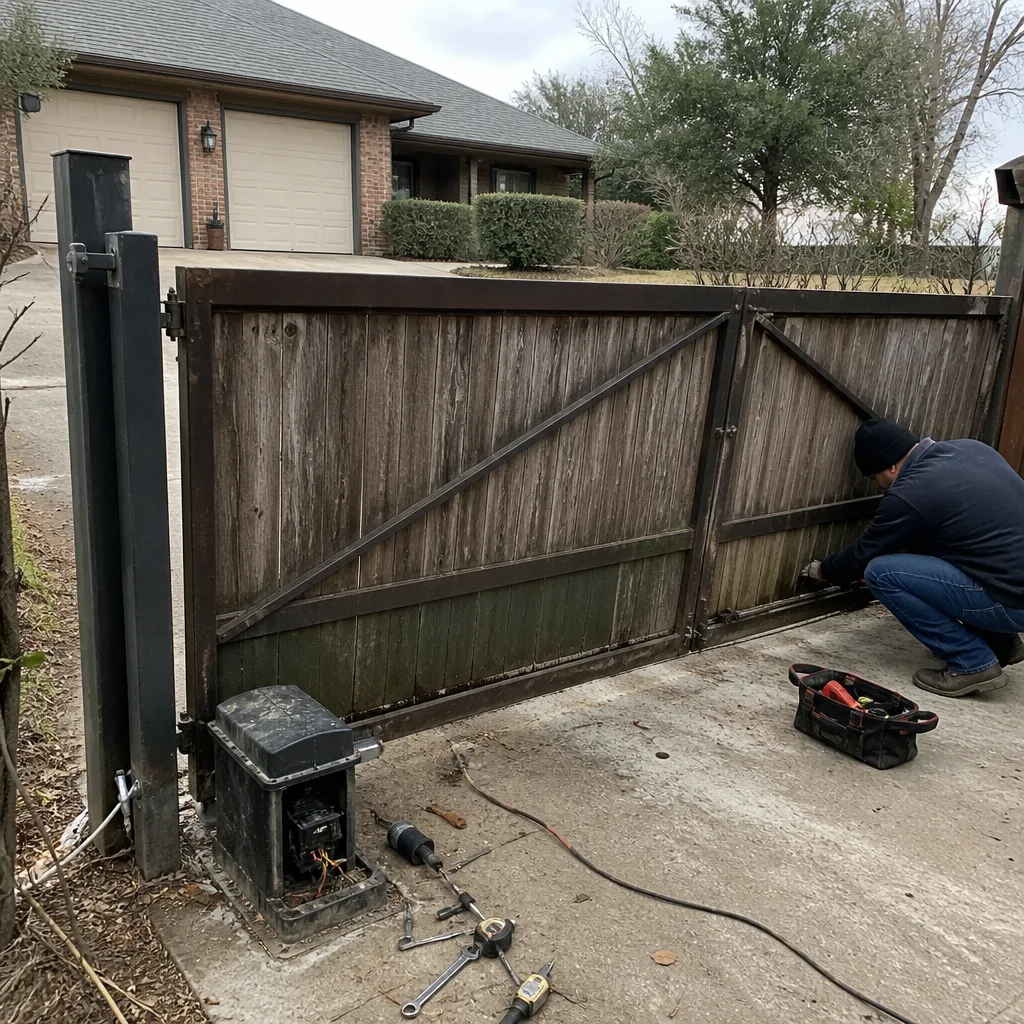 Before
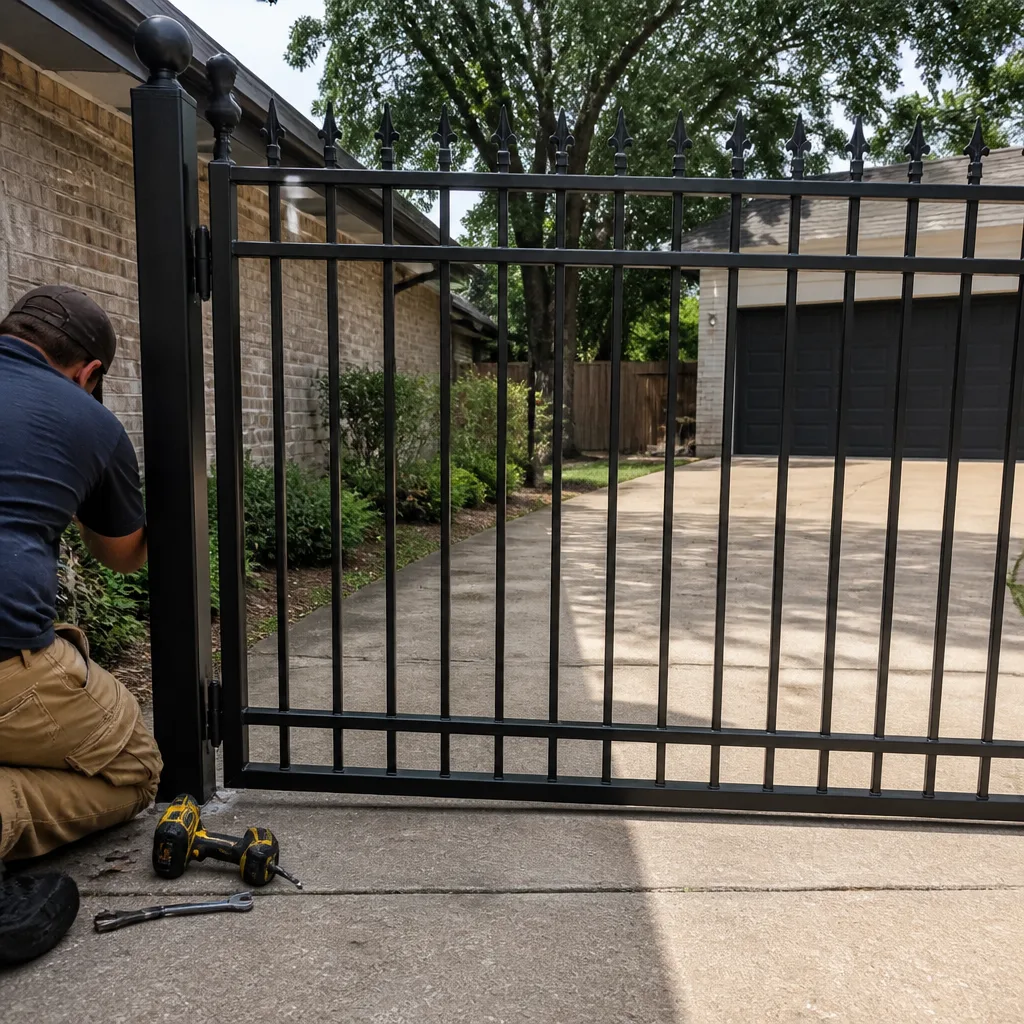 After
After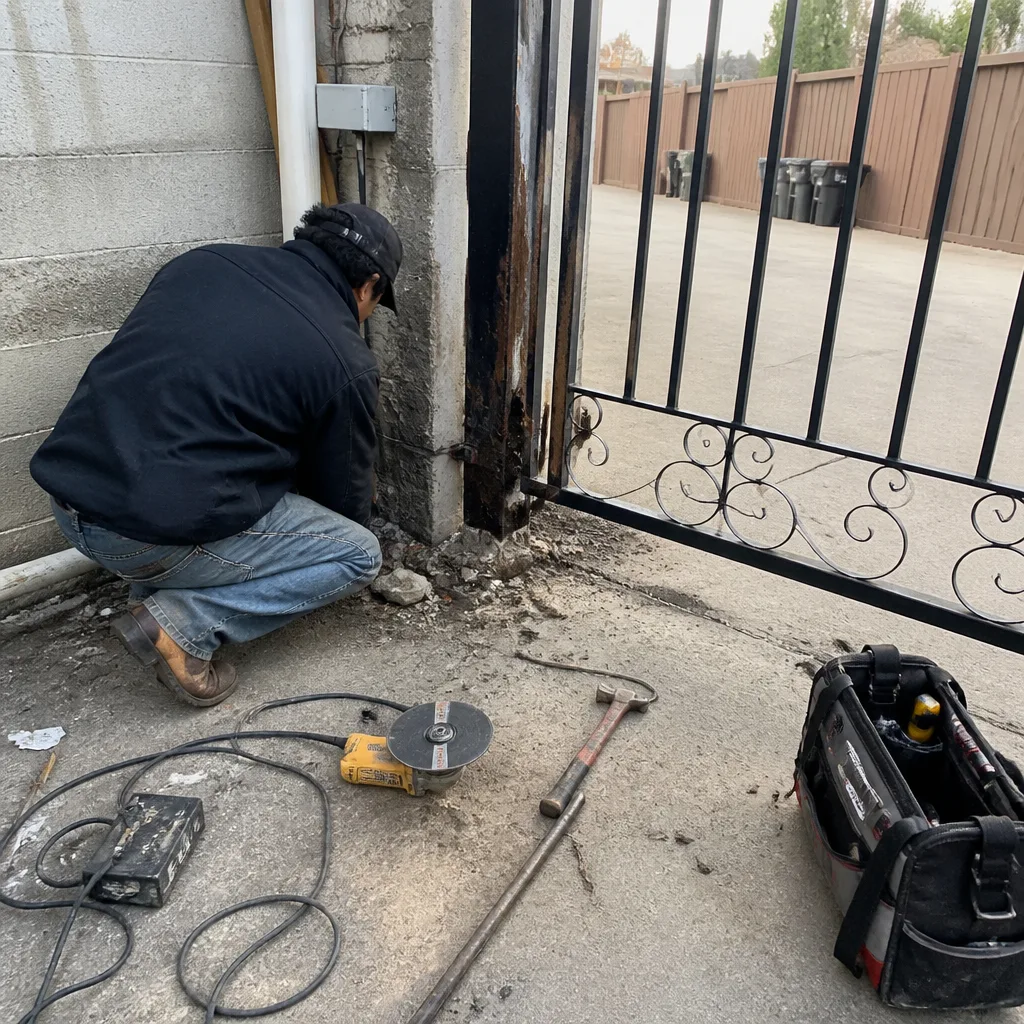 Before
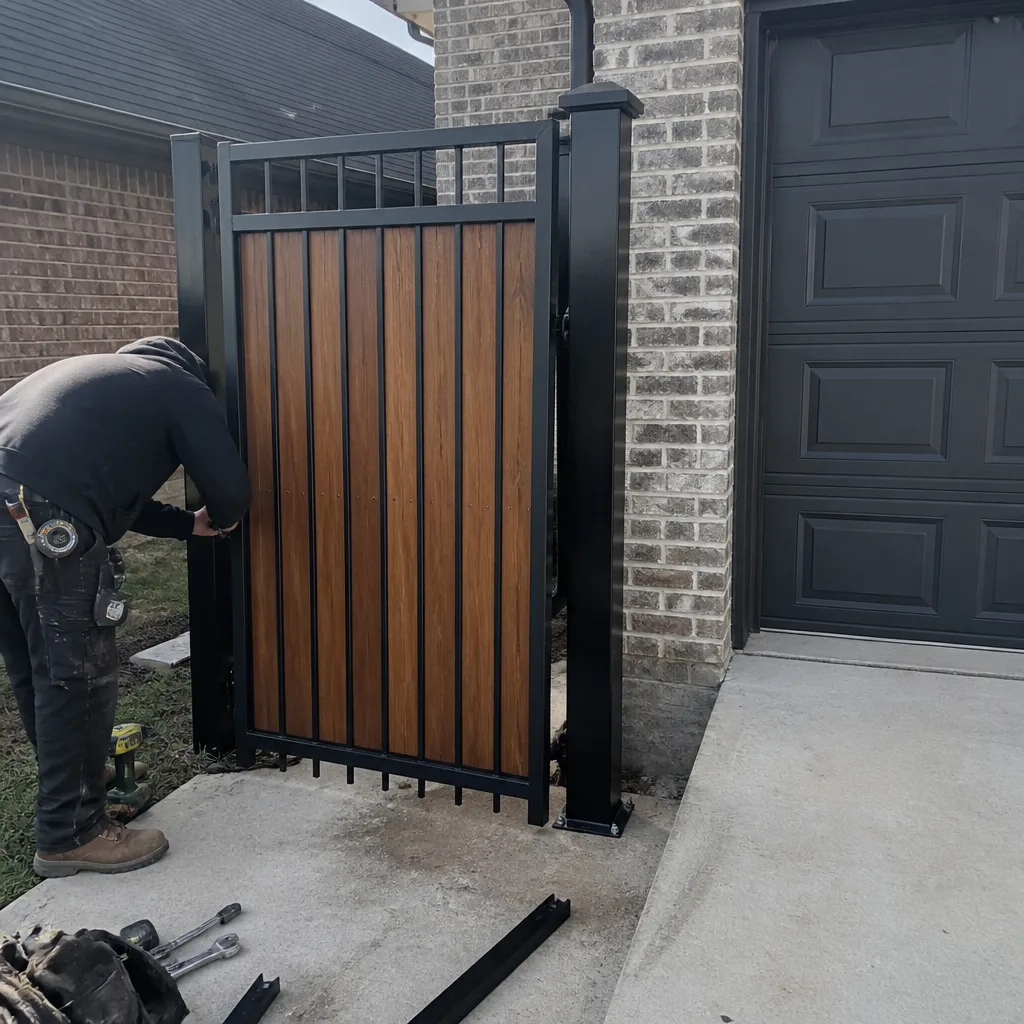 After
After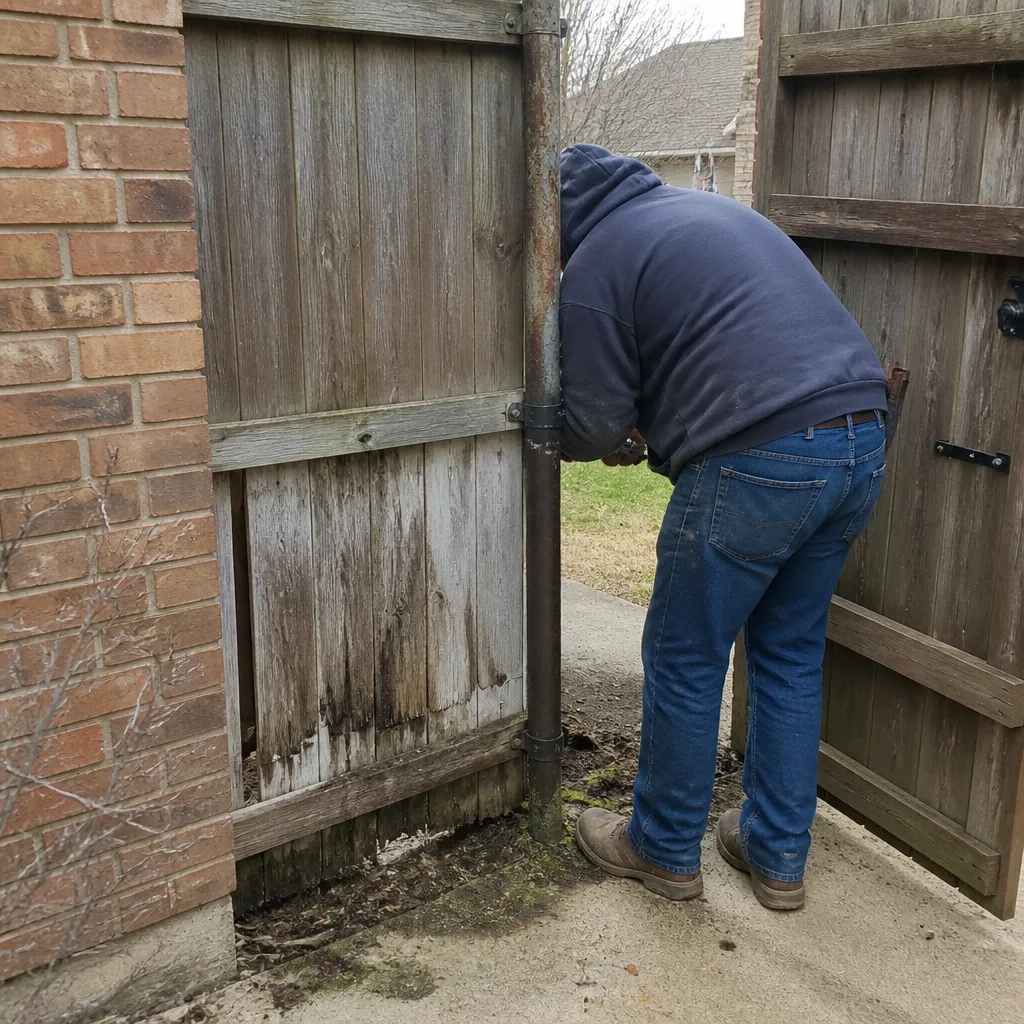 Before
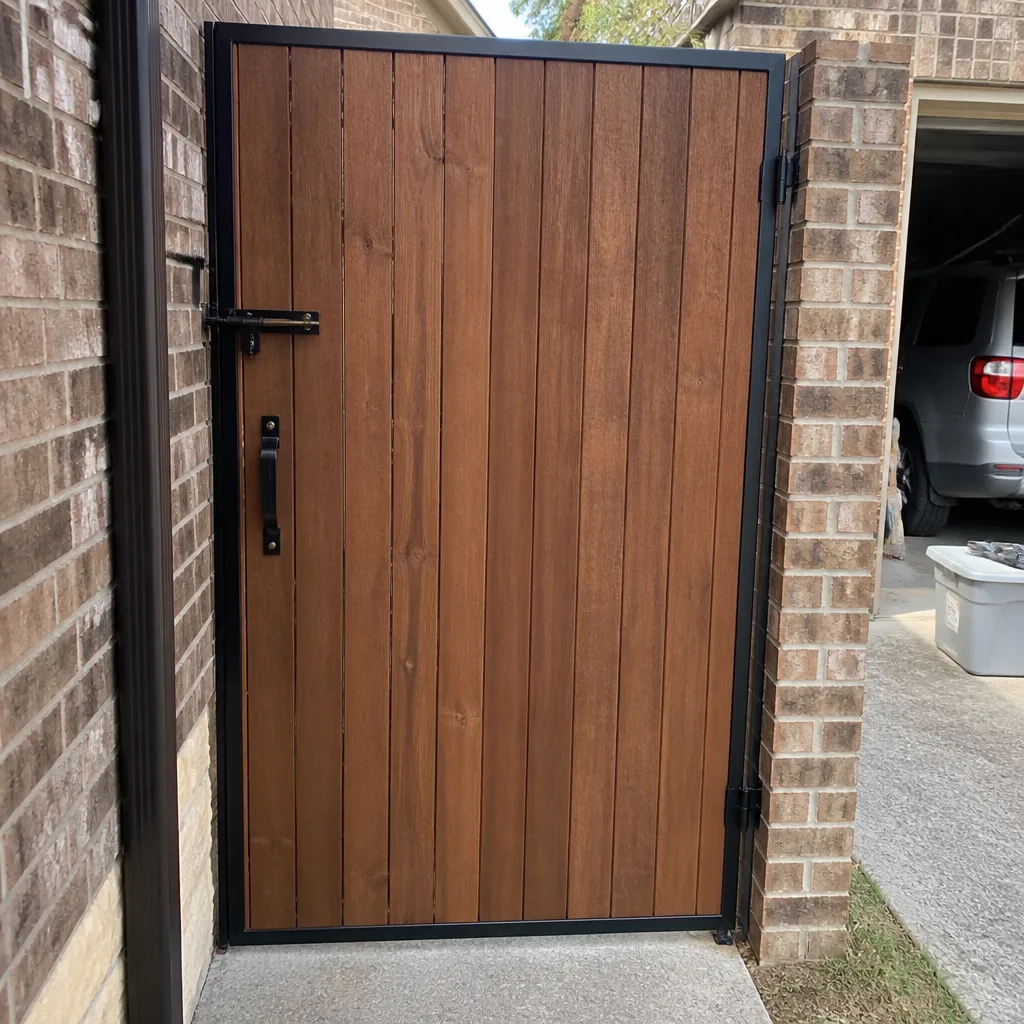 After
AfterGate Repair Warning Signs: A Denton Homeowner’s Reference Guide
The call Hal hates most is the one where the homeowner says “it was making a noise for a few weeks” - because by the time a gate is making noise, the cheap fix window has usually already closed. A gate almost always tells you it is failing before it actually fails. The signals are just easy to ignore or misread if you don’t know what you’re looking at. This reference guide names the specific signs we see on service calls across Denton, what each one usually means mechanically, and how urgent the timeline is so you can prioritize without panicking. If you’ve got a gate that’s acting odd, this is where you start.
Want a shorter version? Start with our Denton gate repair overview - it covers the basics, then come back here for the deep dive on warning signs.
Quick Answer
The most common gate repair warning signs in Denton are a gate that drags or scrapes at the latch end, a hinge that creaks or squeals, a post that visibly leans, and an automatic opener that reverses mid-cycle, runs slow, or starts beeping. A gate that sags more than an inch at the latch end usually means the hinge post is moving, not the gate itself. Most of these problems cost between $180 and $450 to repair when caught early - and far more if a post rots through, a hinge tears out, or an operator burns itself out.
Table of Contents
- The Noises Your Gate Makes (and What Each One Means)
- Gate Sag: Measuring It and Why the Number Matters
- The Post Has Moved: The Problem Homeowners Miss
- Automatic Gate Operator Warnings That Are Not “Normal”
- Wood Gate Rot: Structural vs. Surface Weathering
- Weld Failures and Metal Fatigue on Steel Gates
- A Simple Severity Triage: Fix This Week, This Month, or Watch It
- Common Mistakes to Avoid
- When to Call a Professional
- Frequently Asked Questions
The Noises Your Gate Makes (and What Each One Means)
Gates make a handful of distinct noises, and each one points to a different problem. A high-pitched squeal is usually dry metal rubbing on metal - the hinge pin has lost its grease and the bearing surface is galling. That’s a five-minute fix with the right lubricant, but ignoring it for months turns a $30 service call into a $185 hinge replacement. A grinding or crunching sound is worse: that’s usually dirt and grit packed into the hinge barrel, which acts like sandpaper every time the gate swings.
In Denton, the dry summers and occasional dust storms mean hinge grit is a real thing. Gates on the north side of town near the lake tend to collect more moisture-driven rust; gates out east toward Krum and Sanger get more dust. Both end up at the same place: a hinge that needs attention.
A deep creak or groan is different again. That sound usually means the hinge leaf is moving against a deteriorating wooden post - the screws or lags are working loose, and the creak is wood fibers flexing under load. Here’s the thing: a hinge that needs lubrication, a hinge that is failing, and a post that has moved look similar from ten feet away but have completely different repair costs. Lubrication is cheap. A new hinge is moderate. Resetting or replacing a post is a full afternoon.
What to listen for
- Squeal (high pitch): dry hinge pin, needs grease. Fix now, before galling damages the pin.
- Grind or crunch: grit in the hinge barrel. Needs disassembly, cleaning, and lubricant.
- Groan or creak (low pitch): loose hinge hardware in wood or a stress fracture developing in a weld. Schedule a repair.
- Pops when opening: a weld has cracked, or a section of the frame is torquing. This is structural and needs welding inspection.
- Operator hums but gate doesn’t move: the drive mechanism is slipping or the clutch is worn. Could be a $150 fix or a $450 operator replacement depending on the brand.
One tip from two decades of running Gatewood Fence & Gate home service routes: take ten seconds every month and swing the gate through its full arc while listening. The day you hear something new, call. It’s the difference between a 20-minute fix and a full panel rebuild.
Gate Sag: Measuring It and Why the Number Matters
A gate sags in the hinge post, not in the middle. That sentence matters because most homeowners look at a sagging gate and assume the gate’s frame has bent or the welds are failing. Usually the truth lives at the post. When a gate carries weight, all of it pushes down on the two hinges, and those hinges transfer that force into the post. A post that is undersized, set too shallow, or sitting in loose Denton clay will lean just a degree or two - and that lean becomes inches of drop by the time you measure it at the latch end.
How to measure sag at the latch end
- Close the gate completely and latch it if possible.
- Look at the gap between the latch side of the gate and the receiving post.
- Measure the drop: how far below the latch receiver has the gate’s latch bar fallen.
- A drop under half an inch on a six-foot gate is normal wear.
- A drop between half an inch and one inch means the hinge post has shifted, and you’ll want it fixed within the month.
- A drop over one inch means the post has moved significantly or the hinge itself is failing. Fix this week before the gate starts dragging on the ground and tearing the hinges out of the post.
Here’s the part most people don’t know: sag is geometry, not wear. A gate that has sagged an inch doesn’t get fixed by lifting it and adding washers behind the hinge - that just changes the angle of the force and accelerates the problem. The correct fix is to reset or brace the post, and often to weld a support collar or gusset at the hinge connection. Our Denton gate installation work includes post setting that accounts for the way our soil expands and contracts, which is exactly the detail that prevents the sag from coming back.
Sag structurally means the load path is broken. Cosmetically it looks like a gate that’s “hanging wrong.” They’re rarely the same thing.
The Post Has Moved: The Problem Homeowners Miss
Gates don’t fail first. Posts fail first. The hinge side of a gate assembly is the most highly stressed point on the entire fence line, and everything else cascades from there. In Denton’s clay-heavy soil, especially in neighborhoods with grade changes like the ones along Hickory Creek or out toward Argyle, a shallow-set post has no chance. When the soil gets wet, it swells and pushes. When it dries, it cracks and settles. The post goes along for the ride.
How to spot a moved post before the gate starts dragging:
- Gap at the post base: fresh daylight or widened crack between the post and the surrounding concrete or soil.
- Cracked concrete around the post: a hairline crack from the post outward means lateral force has been building.
- Gate leans toward the latch even when open: the whole assembly is now unplumb and gravity is doing the work.
- Hinges climb the post: you’ll see new scratch marks above or below the original hinge position, or new screws added where old ones pulled out.
- The latch no longer lines up even after hinge adjustment: that’s the post, not the gate.
When we get called out to a Denton home for a gate that won’t close, the first thing Hal does is put a level on the post. Not the gate. The gate lies; the post tells the truth. Fix the panel without the post and you’ll fix it twice.
Automatic Gate Operator Warnings That Are Not “Normal”
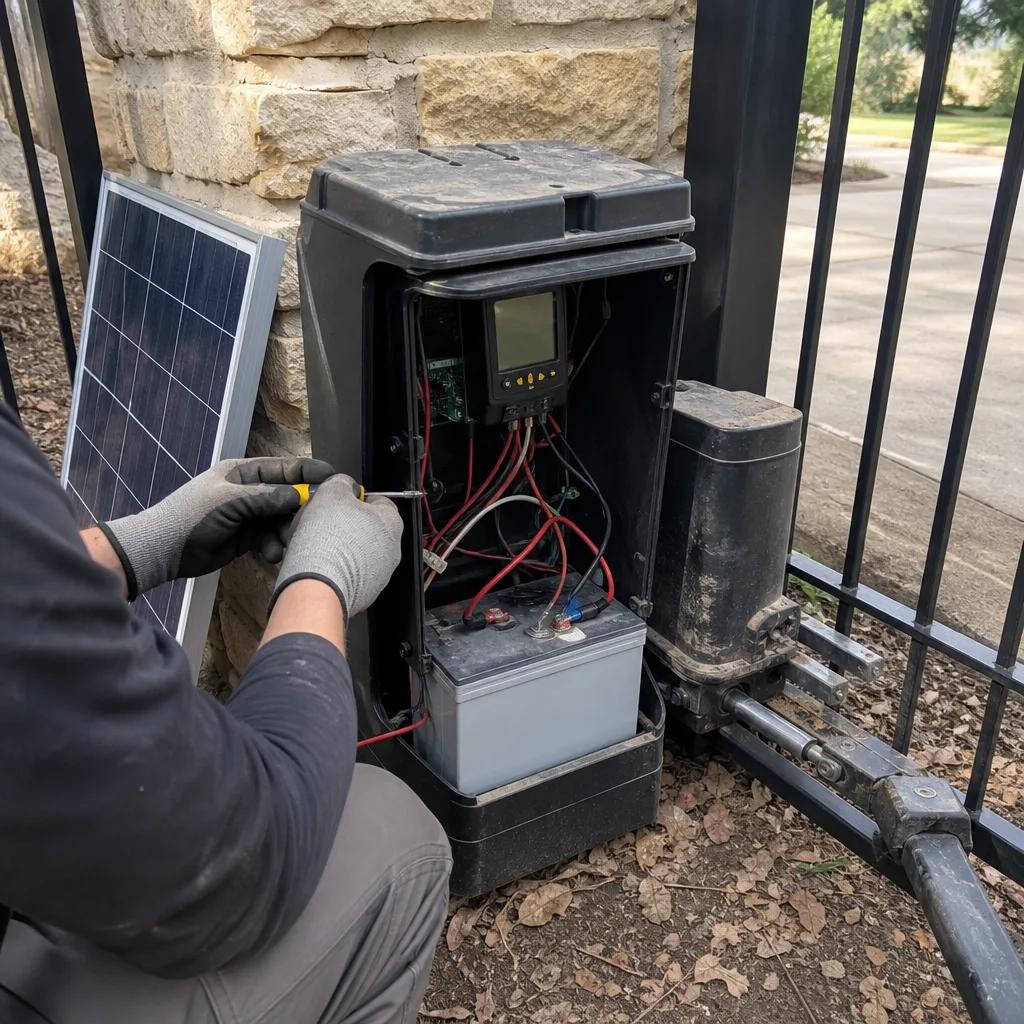
Automatic gate operators talk. Homeowners often don’t understand the dialect. Every time an opener runs slower than it did last month, hesitates mid-cycle, or reverses for no reason, it’s reporting data. Here is what we hear when a LiftMaster or Mighty Mule operator in Denton starts misbehaving.
Slow open and close cycles. If the gate used to open in 14 seconds and now takes 30, the operator is working harder. Common causes are low fluid in a hydraulic unit, a failing capacitor in an electromechanical unit, a battery running out of range on a solar unit, or - most common in our area - a gate that has started binding against the hinge and now fights the opener every cycle. The operator tells you before it quits. Listen.
Intermittent reversal mid-cycle. The gate starts closing, stops, and reverses to open. Homeowners call this “the safety catch activating.” Usually it’s not a safety problem at all - it’s a current spike. The operator senses resistance that looks like an obstruction and aborts. Grit in the wheels, a sagging gate dragging on the operator’s arm, or a dying capacitor can all trigger this. If your gate reverses repeatedly on a clear driveway, it’s a mechanical or electrical issue, not a phantom obstacle.
Weak battery backup response. A gate operator with a battery backup should open and close at least 10 to 15 cycles after a power failure. If yours opens slowly, moves halfway, or gives up after two cycles despite being plugged in, the battery or the charging circuit is on its way out. Denton gets its share of storm season power flickers, and a gate that is “sort of” working on battery will abandon you exactly when you need it.
New beeping, humming, or clicking. Operators that beep before every movement or click repeatedly without moving are usually in a fault state. FAAC and BFT units have specific fault codes - a series of beeps or LED flashes - that correspond to a diagnostic table. If you can count the beeps before you call, our Denton gate motor and opener service can often diagnose it over the phone and bring the right part on the first trip.
Wood Gate Rot: Structural vs. Surface Weathering
Wood gates in Denton live hard. Summer sun bakes the finish, spring and fall bring humidity that swells the grain, and winter freezes whatever moisture is trapped inside. Surface weathering - gray discoloration, light checking, worn finish - is cosmetic. You can sand and reseal it, and the gate will last years more. Structural rot is a different animal. When water gets into end grain, around fastener holes, or into joints where two boards meet, it sits there and feeds rot fungi that travel through the wood like slow roots.
Here’s how to tell the difference.
Surface weathering (watch it, reseal when you can)
- Gray or silvered surface with no soft spots when pressed with a screwdriver.
- Fine cracks along the grain that are shallow and stable.
- Finish flaking but wood still hard underneath.
- No movement when the gate jiggles or when a hinge screw is tightened.
Structural rot (fix this month or this week depending on severity)
- Spongy or soft spots at the hinge, latch, or bottom rail - test by pressing firmly with a wide screwdriver.
- Dark staining and a musty, mushroomy smell; structural rot fungus like Serpula can travel a foot or more beyond visible damage.
- Fasteners that spin without biting, especially at hinges - that means the wood inside has turned to powder.
- The gate sags but the post is plumb - the gate’s internal frame is the failure point, not the post.
- Fungal growth, even dry-looking shelf fungus, anywhere on the gate’s structural rails.
Rot is a timeline problem. The moment it reaches the hinge leaf, the hinge is no longer connected to solid wood - and the first time someone leans on the gate, the hardware tears free. That’s how a mild rot issue becomes a broken latch post and a full gate replacement. In Denton’s climate, rot around ground contact and the bottom rail is the leading cause of wood gate failure after post movement.
Weld Failures and Metal Fatigue on Steel Gates
Steel gates fail at welds for the same reason bridges do: cyclic loading. Every open and close is one cycle, and over years, micro-stress accumulates at the heat-affected zone around each weld. A crack starts invisible, opens slightly, grows through the weld throat, and eventually fails. By the time it’s visible, it’s usually through most of the connection.
What to look for on a steel gate in Denton:
- Rust staining that runs from a joint or a valve: moisture trapped in a micro-crack will rust from the inside out, leaving a telltale orange line.
- Flaking powder coat or paint in a straight line across a joint: the coating was intact until the joint underneath started moving.
- A rhythmic tick or pop when the gate moves: the faces of a cracked weld rub and release under load.
- Gate visibly flexes at a rail intersection: the frame should be rigid. Any visible flexing at a joint means the weld is fractured or the tube wall is failing through corrosion.
This is where our repair-first philosophy matters. A lot of companies in the gate world will tell you a weld failure means a new gate. Hal’s been welding on site since 2001, and the gate stays in your driveway while it gets fixed. We’ve re-welded joints on gates that are 20 years old and left them stronger than the original. The key is catching the crack before the two pieces separate and the gate jams itself into the ground.
For steel gates exposed to Denton’s humidity swings, an annual five-minute inspection of every weld - looking for rust lines, paint flaking, and hairline cracks - costs nothing and prevents the one-day repair from becoming a two-week replacement project.
A Simple Severity Triage: Fix This Week, This Month, or Watch It
Not every warning sign is an emergency. Here is the triage we use when a Denton homeowner calls and describes what they’re seeing. Use this to set your own priorities.
Fix this week
- Gate drops more than one inch at the latch end on a six-foot gate.
- Hinge hardware is pulling out of the post or the gate frame.
- A visible crack in a weld or a joint showing rust lines.
- An operator that reverses mid-cycle on a gate that isn’t binding - this is a fall hazard, especially for a gate with no safety edges.
- A gate that leans noticeably toward the driveway or sidewalk when open.
Fix this month
- Gate drops between half an inch and one inch - the post is shifting, but it’s not urgent yet.
- Structural rot at the bottom rail that hasn’t reached the hinges.
- A hinge that pops or groans - loose hardware that will accelerate once it starts moving.
- An operator that runs noticeably slower than it did three months ago.
- Battery backup that lasts fewer than five cycles.
Watch it
- Grayed, weathered wood with no soft spots.
- Light surface rust without pitting - wire brush it and touch up with a rust-inhibiting primer.
- A mildly creaky hinge that stays silent after lubrication.
- Fading powder coat without flaking.
One more thing worth saying plainly: safety edges and photo eyes are not optional. If your automatic gate has no safety reversing mechanism and something mechanical is wrong, that’s a “fix this week” item no matter what else is going on. A gate closing on a person or pet is a real, severe injury, and any gate that relieves pressure by jamming a limb is a lawsuit waiting. In Denton, code requires safety edges or photo eyes on automatic gates in most installations - and for good reason. We won’t put an operator on a gate without them, full stop.
Common Mistakes to Avoid
- Lubricating a moving post. If the creak is coming from the post flexing in loose soil or degraded concrete, no amount of grease stops it. The post needs to be reset or its concrete collar replaced. Lubrication is for hinges, not foundations.
- Propping the gate up with a wedge or block. When a gate sags and won’t latch, propping it takes the weight off the hinges and hides the problem. The next rain or the next person who leans on it will finish the hinge off. A Denton homeowner we worked with in the Denia neighborhood propped his gate with bricks for two years. The hinge post ended up cracked at the soil line.
- Adjusting the latch receiver instead of checking the post. If the gate has sagged, moving the latch receiver to match makes the gate close - while the post continues to lean and the hinge tears out. Fix the post, and the latch usually realigns on its own.
- Painting over rust. Surface rust on a steel gate will bubble through any paint within a year. The rust has to be mechanically removed or the metal treated with a converter first. Otherwise you’re sealing moisture in, not out.
- Ignoring a slow operator because it still works. Slow operation is almost never the operator “wearing in.” It’s the operator wearing out, usually from fighting a binding gate or running on a weak capacitor. A LiftMaster or BFT unit worked beyond its duty cycle will fail in the driveway at 6:45 on a Monday, not at a convenient time.
- Waiting until the gate won’t open to diagnose the noise. By the time the gate stops moving, the component that was signaling - a hinge, a weld, a capacitor, a battery - has failed completely. The noise was the cheap fix. The failure is the expensive one.
- Assuming a new operator will fix a binding gate. If the gate binds, the new operator inherits the same resistance and fails early. The gate itself has to be corrected first. We see this often enough in Denton that it’s worth saying directly: a new opener on a bad gate is a donation to the scrap pile.
When to Call a Professional
Call when the gate drops more than half an inch at the latch, when a hinge fastener won’t tighten, when a post leans visibly, when a weld shows any crack or rust line, or when the operator cycles slow or reverses without cause. If the gate holds its position, opens and closes crisply, and the only issue is a squeak that responds to grease, you’re probably fine to handle it yourself. But if the squeak comes back within a week, or the gate shifts when you lean on it, that’s a structural signal - and a pro should look at it.
Sheet-metal safety belongs here too: gate hinges and torsion springs, especially on heavy custom gates, can carry hundreds of pounds of stored energy. If a hinge pin is under load and the gate hasn’t been properly blocked, removing that pin can release a gate panel fast enough to break bones. This is the part where we say clearly: if the gate is heavy and the hinges are engaged, get someone who does this every day. Gatewood Fence & Gate offers free estimates in Denton - call (940) 394-8744 and we’ll come look, measure, and quote before any work starts. The price is agreed before we touch the gate, and the 90-Day Done Right Promise is on the invoice in writing.
Want to know more about what a repair actually involves? Here’s our full Denton gate repair page with process, timing, and what to expect.
Frequently Asked Questions
Most gate repairs in Denton run between $180 and $450 for hinge replacement, post reset, latch alignment, or weld repair. Gate operator repair typically runs $150 to $400 for common motor, board, battery, and safety edge issues. Full operator replacement with a quality unit like a BFT or LiftMaster usually lands between $900 and $2,000 installed. The exact price depends on what failed and what caused it. Call (940) 394-8744 for a free estimate - the price you’re quoted is the price you pay, before any work starts.
Yes. Gatewood Fence & Gate has a live person answering the phone 24/7, including weekends, and we schedule same-day repair visits in Denton whenever the truck is available. If it’s an emergency - a gate stuck open, a broken weld, or a failed operator - call (940) 394-8744 and we’ll get there as fast as the schedule allows.
A full gate installation from Gatewood Fence & Gate includes post setting with concrete, gate fabrication or assembly, hinge hardware, latch, and operator mounting if needed. We handle the measurement, the materials, the welding, and the hardware - everything from sorting out a plan to testing the completed install. Safety edges and photo eyes are included on automatic gates, not an add-on. For details, see our Denton gate installation page.
Yes. We handle the operator’s power run, including low-voltage runs for solar or hardwired systems, and we install safety edges and photo eyes as part of every automatic gate job. Power and safety are not extras; they’re the core of an operator install. If you have an existing gate that’s missing safety reversing, call (940) 394-8744 and we’ll get it sorted.
Bring us the written estimate from the other company and we’ll give you a free second opinion on what they diagnosed and what it actually needs. We don’t expect you to take our word for it - we’ll walk you through the gate and show you what’s failing and what isn’t. Hal does this regularly for Denton homeowners who’ve been told a gate needed replacing when it needed a post reset and two weld repairs.
Yes. Gatewood Fence & Gate is locally owned and owner-operated, and Hal Gatewood has been working on gates since 2001. The shop has a published address and the license is on file. When you call, you’ll get a live person - not a voicemail, not a call center. If you want, you can drive to the shop and look us in the eye before we even touch your gate. That’s the way Hal has always worked, and it’s the way this business is built to stay.
See more about who we are and how we approach gate work on the Gatewood Fence & Gate home page.
The Bottom Line
A gate tells you when it’s in trouble. The squeal, the sag, the slow operator, the rust-line weld - all of it is communication, and the earlier you answer, the smaller the invoice. The hinge post is the place most failures start; the latch end is where they show up. A gate sags in the post, not the middle. An operator that’s slow today is dead tomorrow unless the binding gate gets fixed first. And when the repair comes, find a company whose name is on the shop, who welds on site, who answers the phone, and who puts the 90-Day Done Right Promise in writing. In Denton, that’s Gatewood Fence & Gate. Call (940) 394-8744 and Hal will come look at it himself.
Written by Hal Gatewood, Owner at Gatewood Fence & Gate, serving Denton since 2001.