
Last updated August 26, 2026
Free on-site gate assessment - hinges, posts, and your LiftMaster or Nice gate operator checked before anything is quoted
The assessment is free and the quote is the invoice.
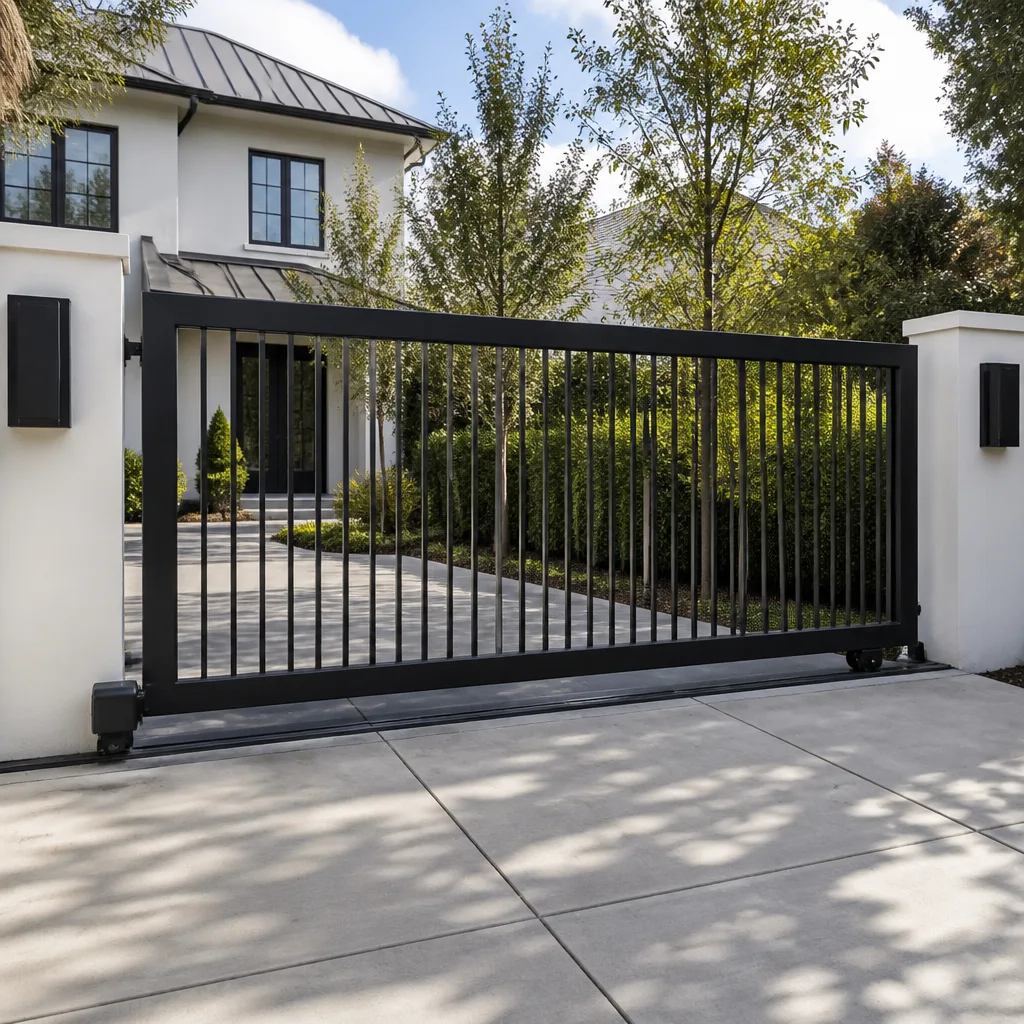
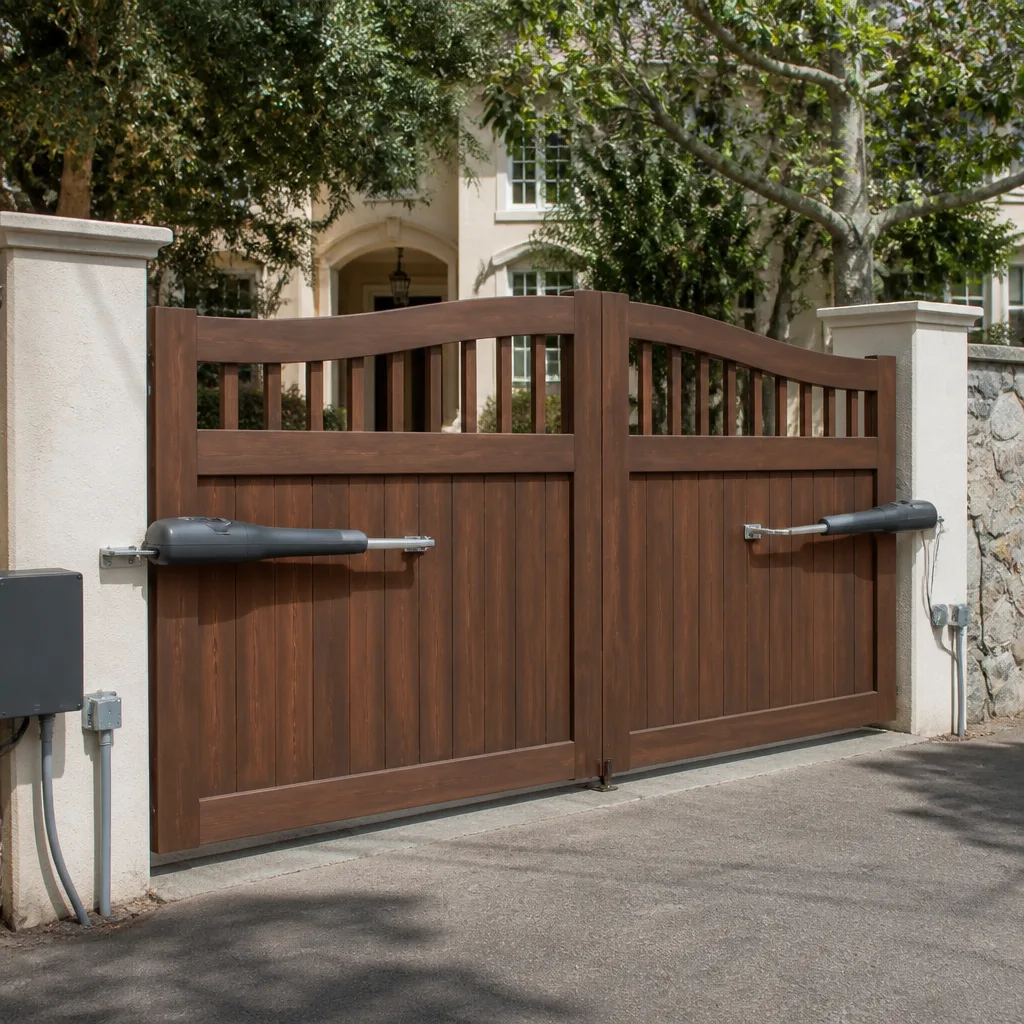
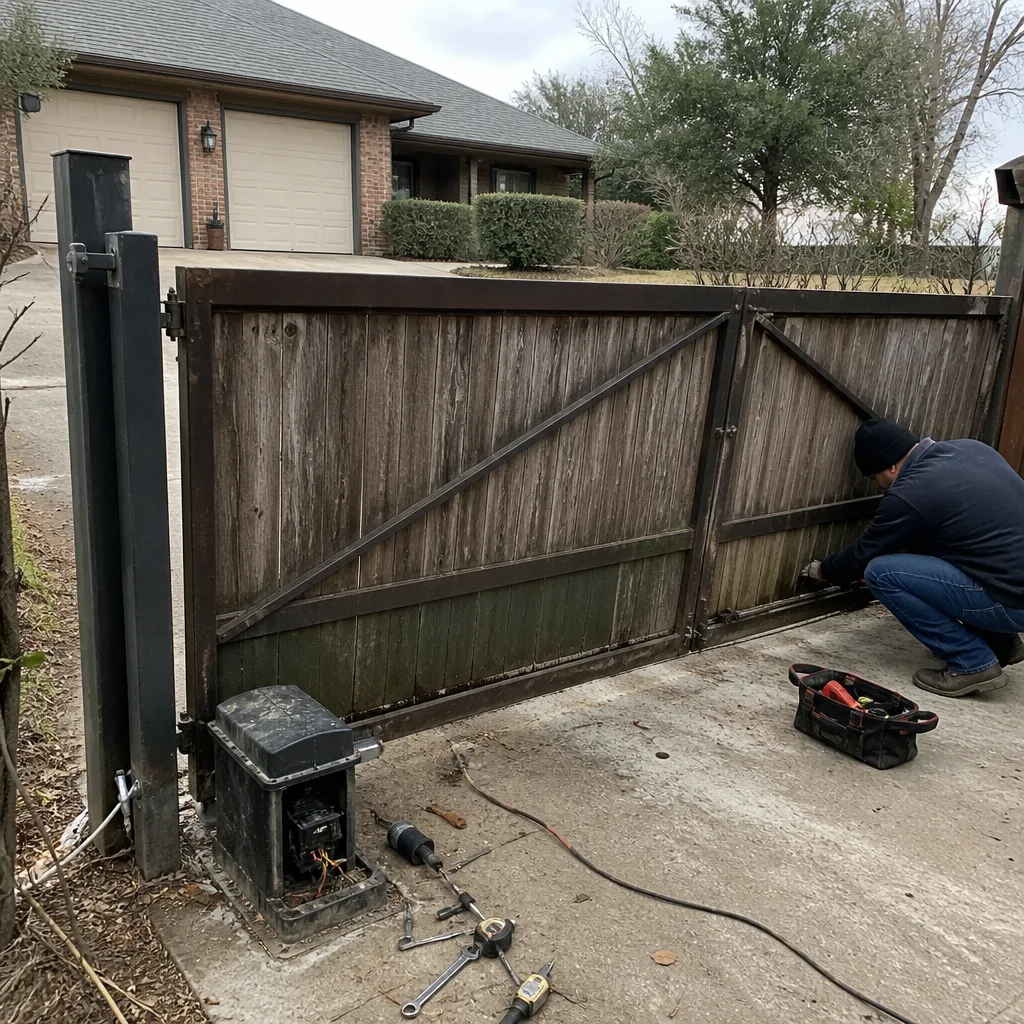 Before
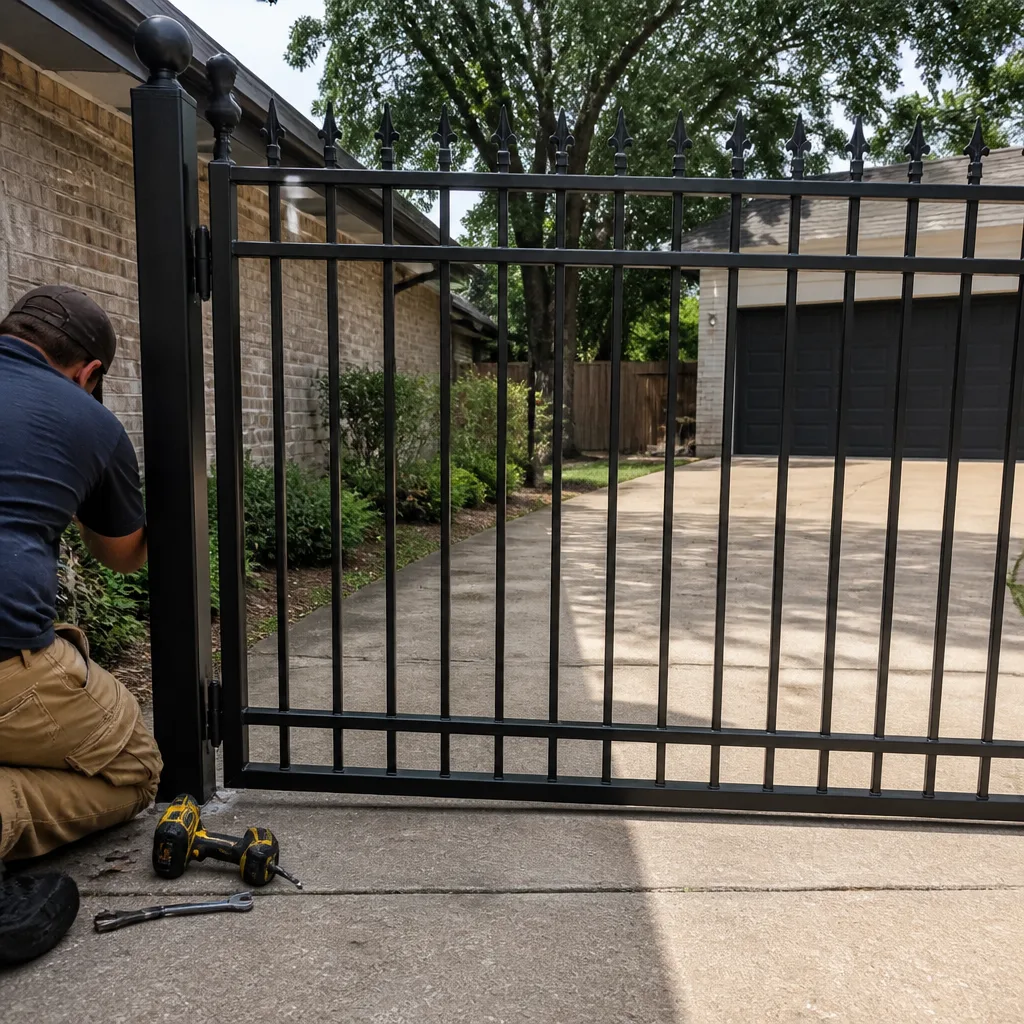 After
After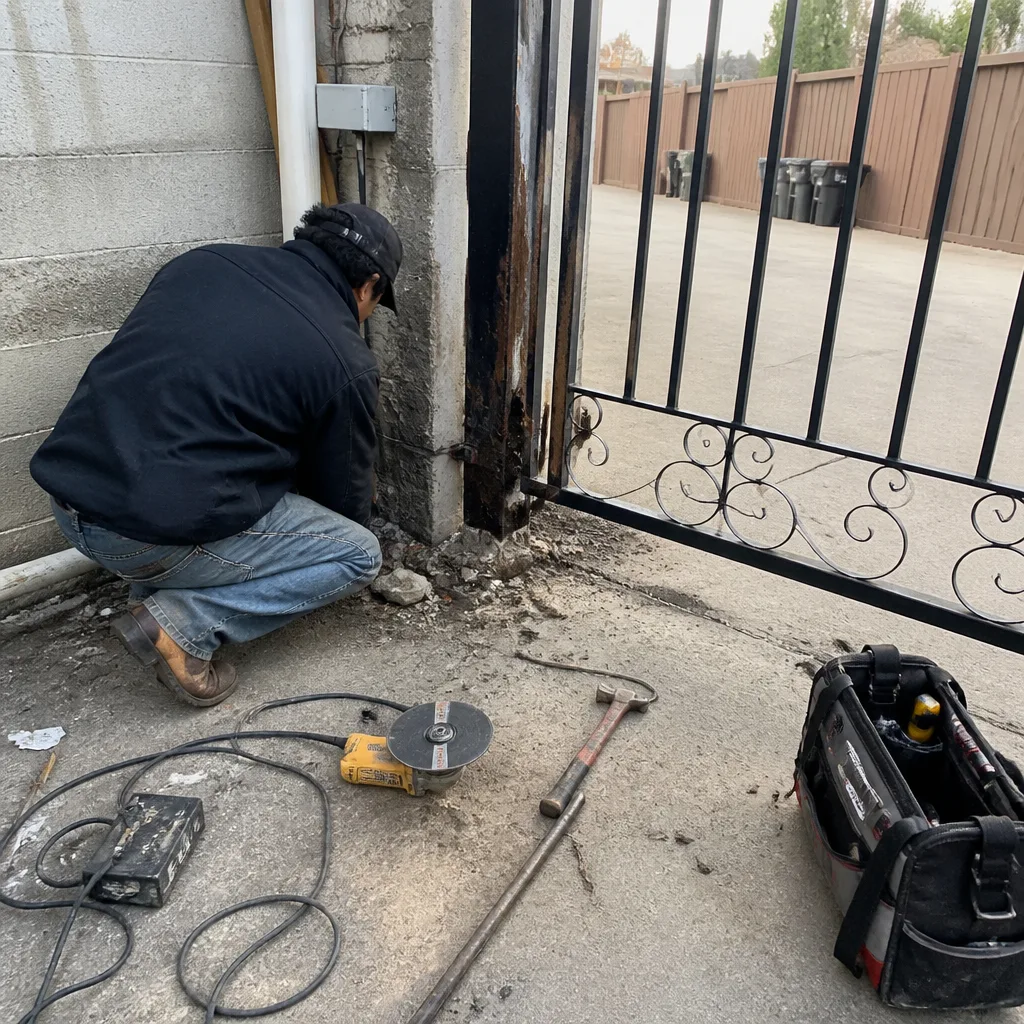 Before
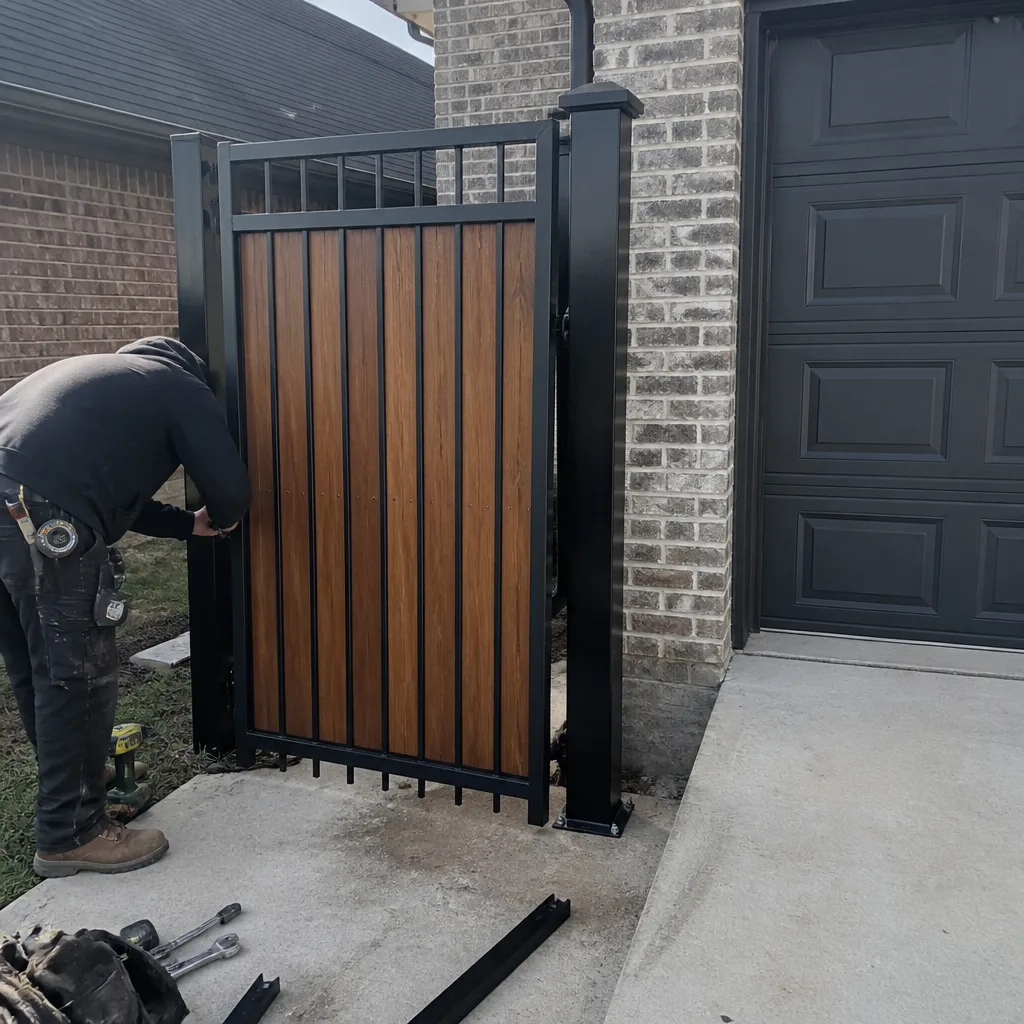 After
After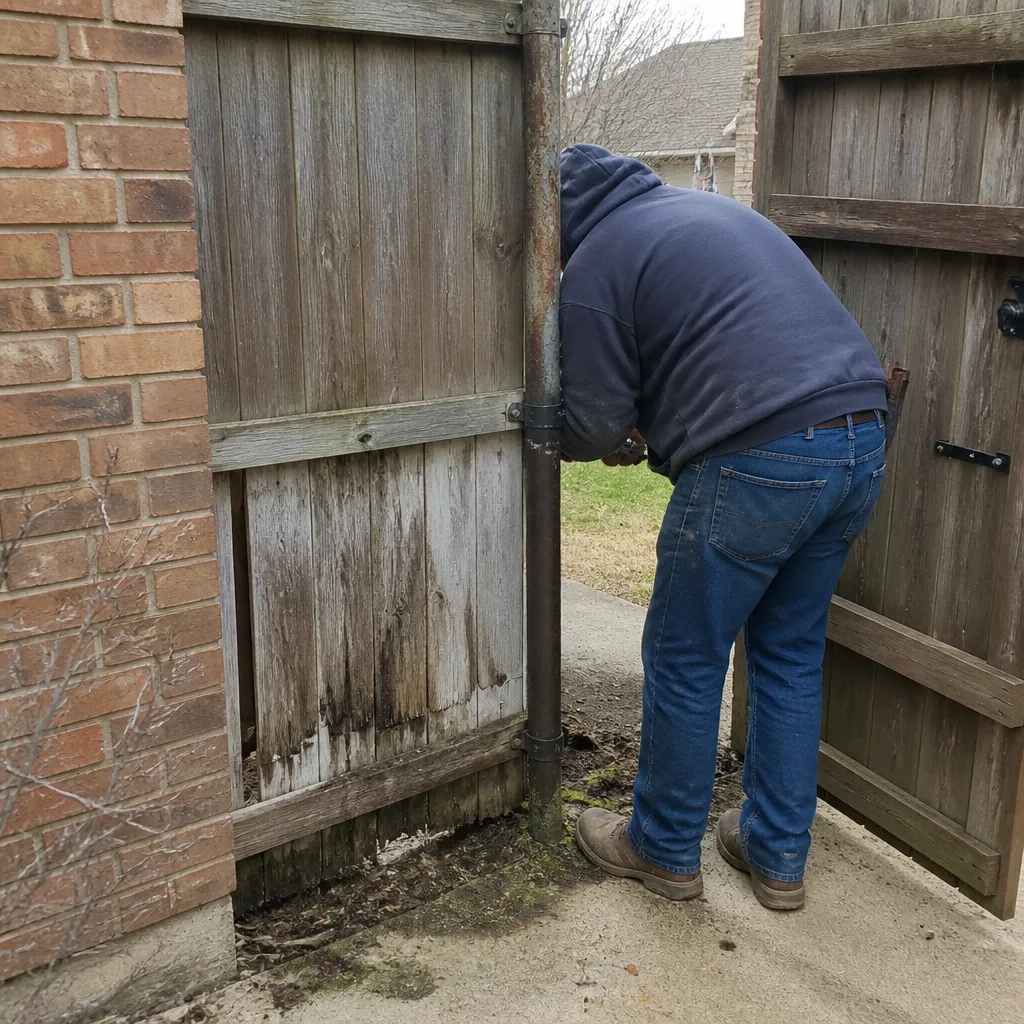 Before
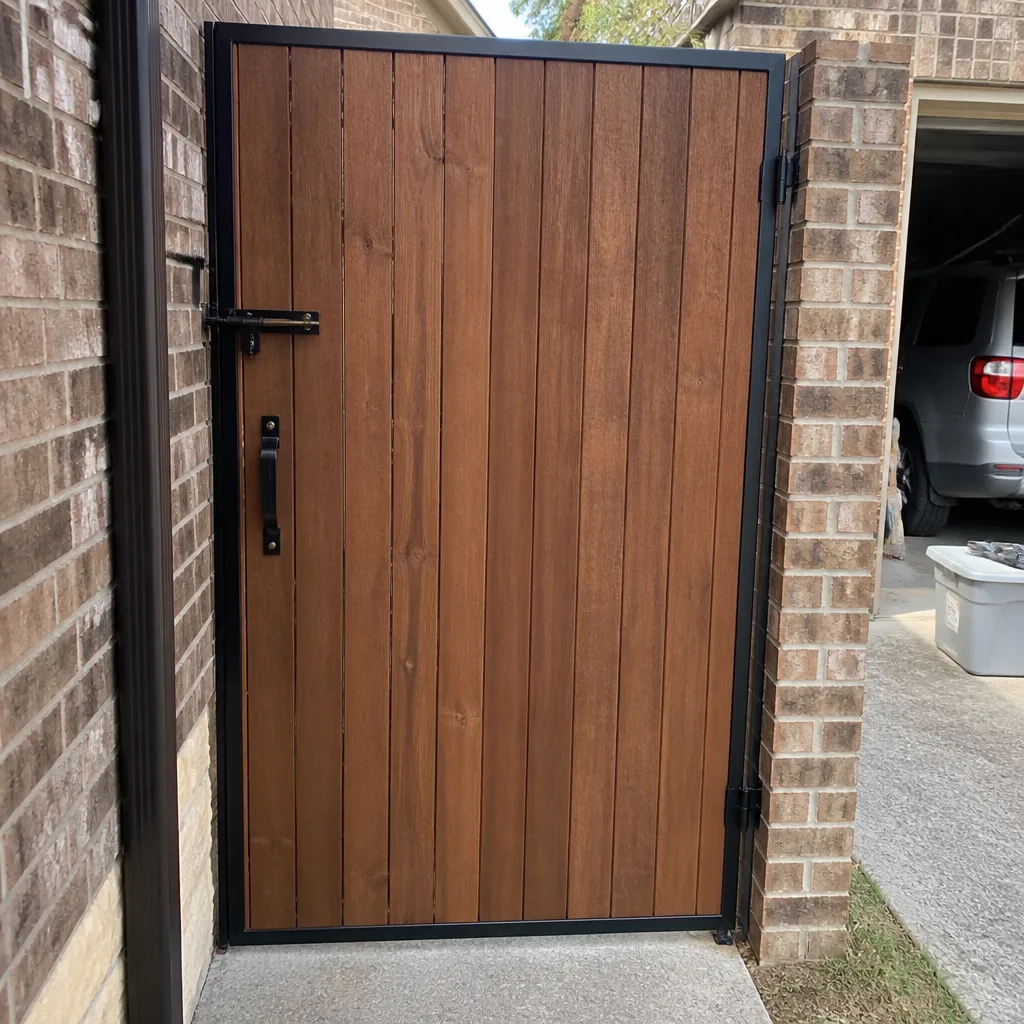 After
AfterGate Repair Permits, Codes & Inspections in TX: What You Need to Know
Texas does not have a statewide residential fence or gate code. That sounds like good news until you realize it means enforcement falls entirely to your local municipality, and Denton’s rules are not the same as what your neighbor in Frisco dealt with last year. Most gate repairs in Texas never need a permit. The exceptions are specific and predictable, and knowing where the line sits can save you from a title problem when you sell your house, an insurance claim that gets denied, or a fine you never saw coming from a city inspector who did. In this guide we will explain exactly which gate projects Denton considers permitted work, which ones slide through as ordinary repair, what your HOA can require even when the city stays out of it, and how to pull your own permit if a contractor tries to dodge the paperwork. If you own a gate in Denton or anywhere in North Texas, this is the plain-language map you have been looking for.
Quick Answer
Most gate repairs in Texas do not require a permit, including like-for-like replacement of hinges, pickets, gate openers, and welded repairs to existing frames. A permit is generally required only when you replace the gate posts or alter the driveway entry structure, install a new automatic gate operator with new electrical wiring, or build a brand-new gate where one did not previously exist. In Denton, the deciding factors are whether you are changing the structural footprint and whether new electrical work is involved. When in doubt, call Denton’s Development Services and ask specifically about your project before the first hole gets dug.
Table of Contents
- Why Texas Has No Statewide Gate Code
- What Denton Actually Requires (The Specific Threshold)
- The HOA Overlay: Approval When the City Says No Permit
- Unpermitted Work and Your Homeowner’s Insurance
- Automatic Gate Operators and the NEC Code
- How to Pull Your Own Permit in Denton
- Common Mistakes to Avoid
- When to Call a Professional
Why Texas Has No Statewide Gate Code
Texas is a home-rule state. That is a legal term, but the practical meaning is simple: the legislature in Austin does not pass a single building code that every county and city must enforce. Instead, each municipality adopts its own codes, often by referencing national model codes like the International Residential Code, and then amends them locally. For gates and fences, the state has never stepped in with a uniform rulebook, and it probably never will. A gate is a property-boundary structure, and property questions in Texas have always been local questions.
What that means for you as a homeowner is that nobody can give you a one-size-fits-all Texas answer. A gate repair in Denton follows Denton’s adopted codes. Ten miles south in Lewisville, the same repair follows a different set of ordinances. Twenty miles east in Frisco, different again. We have fixed gates in all three, and we have had to walk customers through three different sets of rules in the same week. The Texas Municipal League keeps a database of local ordinances, but the practical answer is always the same: ask the city where the gate sits, not the state, and not your cousin in Houston.
Denton operates under a unified Development Services department that handles planning, permitting, and inspections. They publish a permit guide, and their inspectors are, in our experience, reasonable people who will tell you plainly whether something needs a permit before you apply. That is the good side of local control. The hard side is that the answer changes as codes get updated, and a gate that was fine to fix without paperwork in 2019 might not be fine in 2026. On the Gatewood Fence & Gate home page we keep a running list of the questions we get asked most often, and permit questions have moved up that list every year.
What Denton Actually Requires (The Specific Threshold)
Denton’s Development Services is clear about this, and their threshold is more specific than the vague “major vs minor” test most people assume. The city’s position is that a like-for-like repair does not require a permit. You can replace broken hinges with the same size and type. You can weld a cracked gate frame back together. You can replace bent pickets, install a new latch, hang a new gate leaf on the existing posts, and swap a failed gate opener for a comparable unit. None of that needs paperwork, and calling it out does not earn you a visit from anyone.
Where the permit requirement lands is when you change the structure or the electrical system. Here is the Denton-specific list of gate projects that do require a permit:
- Replacing or resetting gate posts. If a post has rotted, rusted, or shifted and you pull it out of the ground to put in a new one, you have changed the structural footprint. The city wants to inspect the post depth, the concrete, and the set before you hang a gate leaf on it.
- Installing a new automatic gate operator where none existed. Even if the gate itself stays put, adding a motor means adding electrical wiring, and any new electrical wiring in Denton requires an electrical permit and inspection.
- Building a new gate or driveway entry where one did not previously exist. That is new construction, not repair, and the city treats it as such.
- Widening or relocating an existing gate opening. If you are changing the posts, moving the gate line, or altering the curb cut, you need a permit and likely a site plan review.
The line Denton draws is practical: if the work leaves the permanent structure the way it was and does not add new electrical runs, it is repair. If the work changes what stands in the ground or what wires run through it, it is improvement, and improvement needs a permit. A sagging gate in the hinge post, not in the middle, is a repair. A new post is a change. We have had customers tell us their previous contractor “just handled” a post replacement without a permit, and the gate worked fine, right up until the house was under contract and the title company found no record of the work. For Gate Repair Warning Signs: A Denton Homeowner’s Reference Guide, see our dedicated post.
The HOA Overlay: Approval When the City Says No Permit
Here is where it gets tricky, and where most guides leave you hanging. In Denton, many neighborhoods are not just subject to city codes. They sit inside a homeowners association with its own architectural review committee, and that committee can require approval for gate work that the city would never permit. If you live in a Denton subdivision with an HOA, your deed restrictions are a contract, not a suggestion.
We have seen HOAs in Denton, Argyle, and Krum require written approval for something as simple as repainting a gate, replacing a gate with a different material, or changing the style of the pickets. The city never weighs in on a paint color. The HOA gladly will. A customer in an older Denton neighborhood replaced a rusted chain-link gate with a wooden privacy gate, no city permit involved, and got a letter from the HOA the next month requiring him to submit a retroactive application and an appearance before the architectural committee. The gate was fine. The paperwork was not.
The rule of thumb we tell every homeowner: before you start, read your HOA’s covenants twice. Look specifically for language about fences, gates, and “street-facing structures.” Some Denton HOAs require board approval even for a like-for-like replacement if the replacement looks even slightly different. Others do not care as long as the footprint matches. If you cannot find your covenants, call your HOA management company and ask. That conversation takes ten minutes and can save you a hearing.
What makes this worth understanding is that the city of Denton will not help you with an HOA problem. Development Services enforces city code. The HOA enforces your deed restrictions. If you skip HOA approval that was required, the city will not write you a ticket, but the HOA can fine you, require you to tear out the gate you just installed, or place a lien on your property. Those liens show up at closing, same as any other title cloud. In our experience, the smartest approach in Denton is to treat the city and the HOA as two separate jurisdictions, both of which need to be satisfied before the first posthole gets dug.
Unpermitted Work and Your Homeowner’s Insurance
The question nobody asks in time: does unpermitted gate work affect my insurance? And the answer in Texas is yes, it can, especially when the unpermitted work contributes to a property damage claim. Homeowner’s policies in Texas are written with an implied expectation that your property complies with applicable building codes. When you file a claim for damage, the adjuster will look at what failed and why. If unpermitted structural gate work is part of that chain, you have handed the insurance company a reason to reduce or deny the payout.
Here is a real scenario we have seen unfold in Denton. A homeowner replaced his own gate posts without a permit. Two years later, a windstorm blew the gate over and damaged his parked truck. The adjuster noted the posts had been set without inspection and questioned the depth and footings. The structural portion of the claim got cut back, and the homeowner ate the difference. That is not a hypothetical. That is a Tuesday.
The insurance angle is also worth considering when you are swapping in an automatic gate operator. If a gate operator installs without permits and later someone gets hurt, the liability picture gets murky. We are not insurance agents, and we will not pretend to be. What we will say, from 29 years of fixing gates in this county, is that the five hundred dollars or whatever extra a permit costs is cheap insurance against finding out what your policy does not cover. And if you are buying a house in Denton, ask the seller directly whether any gate or fence work was permitted. Unpermitted structural work is a known title issue in Texas, and you would rather hear about it before closing than after.
Automatic Gate Operators and the NEC Code
Here is the part most local gate conversations miss entirely. In Texas, even where a city does not require a specific “gate permit” for installing an automatic opener, the electrical work is still governed by the National Electrical Code, and specifically by NEC Article 680 and UL 325 standards for gate operators. Denton adopts the NEC as part of its electrical code, so any new power run for a gate opener in Denton falls under that adoption.
What this looks like in practice: a gate operator needs a dedicated circuit, ground-fault protection, and a proper disconnecting means. The wiring cannot be UV-damaged, it must be rated for buried or exposed outdoor use, and the operator itself must carry entrapment protection, which means safety edges, photo eyes, or both. UL 325 governs things like the force limitation on the arm, and if you or a contractor bypasses the safety entrapment protections, you are not just breaking code. You are creating a genuinely dangerous situation, and if someone gets hurt, you are the one standing there. A gate that closes on a child or a dog is not an inconvenience; it is a life-changing event, and the entrapment protections are the only thing standing between a functioning gate and a tragedy.
Brands matter less than the installation here. We service Gate Motor & Opener in Denton across the board, from Linear to BFT to Viking, and the brand has never changed the code requirement. The permit requirements do not change based on what box the operator shipped in. What changes is whether the installer pulls the wires properly, protects the run, and wires the entrapment devices so they cannot be bypassed. If you are installing an opener on a gate in Denton, the electrical inspection is not busywork. It is the point.
One more thing worth knowing: solar-powered gate operators are not automatically exempt. The operator itself may run on solar, but if there is any line-voltage component, any transformer, any hardwired backup, the code still applies. We see this all the time with Ghost Controls and similar DIY kits. The solar panel does the driving, but the wiring still has to be done right, and in Denton, if the wiring is new, the permit still applies.
How to Pull Your Own Permit in Denton
If a contractor refuses to pull a permit for work that requires one, that is a red flag the size of Texas. See our How to Hire a Gate Repair Contractor in Denton: A Step-by-Step Guide for vetting tips. A contractor who will not do the paperwork is typically either unlicensed, underinsured, or in a hurry to get your money and vanish. The good news is you are not stuck with that person, and you can pull your own permit as a homeowner in Denton. Here is the plain-language process, step by step.
- Determine which permit you need. Call Denton’s Development Services at (940) 394-8744 and describe your project in plain terms. Say: “I live in Denton, and I want to replace my driveway gate posts and install an automatic opener.” Ask whether you need a residential building permit, an electrical permit, or both. Write down the name of the person you spoke with.
- Gather your documents. You will need a basic site plan or drawing that shows the gate location, the property lines, and the driveway layout. It does not need to be architect-drawn. A clean, dimensioned sketch on graph paper works for most residential gates. For new gates near a curb, you will also need to show the setback from the street edge.
- Submit the application. Denton’s Development Services accepts permit applications online through the city’s Civic Access portal, in person at the Development Services building, or over the phone for simple projects. You will pay the permit fee up front. For a residential gate post replacement, the fee is usually between $50 and $200, depending on the scope and whether electrical is included.
- Schedule the inspections. The city will tell you which inspections apply. For gate work, there are typically two: a structural or post inspection before concrete is poured (if new posts are involved) and an electrical inspection for any new opener wiring. Denton’s inspections are usually scheduled for the next business day after the site is ready.
- Keep all records. When the permit closes, keep the paperwork somewhere permanent. You will want it when you sell. A closed permit in hand is the single best answer to any future title or insurance question.
We understand this is not the most exciting part of gate ownership. But the process in Denton is honestly not that bad, and the people behind the counter have been helpful every time we have sat down with them. If you work with a contractor who is willing to pull the permits for you, that is fine too. Just verify the permit number is real, that it appears in the city’s online system, and that it gets closed with final inspections before you hand over final payment. A contractor who says “we’ll close it out later” is leaving you holding an open permit, and an open permit can bite you at title.
Common Mistakes to Avoid
- Assuming Denton’s rules match your old city’s rules. Even up the road in Aubrey or down toward Corinth, the municipal codes stretch and bend in different places. Always check with the city where the gate stands.
- Replacing posts without a permit. The single most common mistake we see. Homeowners treat “just replacing the posts” like patching drywall. Denton treats it as structural work, and if the title company asks questions five years from now, the answer “we just fixed it” is not going to be enough.
- Skipping the HOA check because the city said no permit. These are two separate systems. The city allowing a like-for-like repair does not mean your HOA has no opinion about your new gate style.
- Installing a new automatic opener on existing wiring without checking the wiring first. We pull hundreds of old gate operator wires every year, and the number that would fail an NEC inspection on day one is sobering. If your opener install includes new runs, pull the electric permit.
- Letting a contractor wave off the permit conversation. If the person you hired says “you don’t need a permit for this” and will not let you verify that with the city yourself, that is not confidence, that is avoidance. A professional will help you make the call to confirm.
- Ignoring UL 325 entrapment protections. If an operator gets installed without working safety edges or photo eyes, that is a genuine danger, not a minor shortcut. Fix it immediately and never leave it that way.
When to Call a Professional
You can handle many gate repairs on your own, and there is no virtue in writing a check for work you can do with a wrench. But there are specific moments when the right move is to stop and call someone who does this every single day. Gate Repair in Denton is half our business, and here is the honest list. If your gate post is visibly moving, cracked at the base, or leaning enough that the gate no longer latches, that is a structural problem with liability riding on it; let a pro set it properly and pull the permit if Denton requires it. If you are installing an automatic opener for the first time and need new wiring run, that is electrical work with code and safety implications; do not guess. And if you find yourself staring at an existing gate that has a torn safety edge, a bypassed photo eye, or an operator that slams the gate closed faster than it should, stop using the gate and get it fixed before someone gets hurt. Gatewood Fence & Gate offers free estimates in Denton, and we will give you a straight answer about permits before you spend a dime. Call (940) 394-8744.
Frequently Asked Questions
Not for like-for-like repairs such as replacing hinges, pickets, latches, or welding an existing cracked frame. You generally need a permit only when replacing gate posts, adding new electrical runs, widening the opening, or building a new gate where none existed. What counts as “like-for-like” is defined by your local city, and in Denton that means ask before you change the structure. When in doubt, call Denton Development Services or call us at (940) 394-8744 and we’ll help you figure out which side of the line your project falls on. You can also browse more guides & resources on our blog.
Yes, if the installation requires new electrical wiring, a new circuit, or a power run that did not previously exist. If you are replacing an existing failed opener and tying into existing code-compliant wiring, no permit is typically required. For a new opener, the electrical permit and the NEC inspection are not just paperwork; they are what protect you, and we have never had a customer regret pulling them.
In Texas, unpermitted structural work can surface as a title issue during the sale, and buyers or title companies may require you to retroactively permit it, pull it out, or escrow money to cover the fix. The most common scenario we see in Denton is unpermitted post replacement showing up on a home inspection report, which then has to be disclosed and negotiated. A closed permit for gate work is a small thing to have in your records and a large thing if you do not.
Yes. Your HOA’s deed restrictions are a separate legal contract from city code, and many Denton area HOAs require architectural committee approval for gate changes, repainting, material swaps, or even style changes that the city would never regulate. Read your covenants first, and if you do not have them, request them from your HOA management company before you do the work.
Not automatically. The solar panel itself may generate the power, but if the install includes line-voltage wiring, a transformer, or any hardwired component, the permit still applies under Denton’s adopted NEC. We service Ghost Controls and similar solar-friendly operators, and the code questions are the same as any hardwired system.
For a typical residential gate project, the permit fee in Denton generally runs between $50 and $200 depending on whether electrical work is included and whether the project is a repair, a post replacement, or new construction. Exact pricing comes from Development Services when you submit the application, and it is always cheaper than a title cloud. Call (940) 394-8744 for an honest read on whether your project needs one, and we’ll point you to the right desk at the city.
The Bottom Line
Texas pushed gate regulation down to the local level, and that is why the only answer that matters is the one from the city where the gate is planted. In Denton, the line is simple once you know it: like-for-like repair needs no permit, post replacement and new electrical work do, and your HOA may add a layer of its own on top. The paperwork is not the enemy. It is cheap, it is manageable, and it is the thing that keeps a five-hundred-dollar gate repair from becoming a five-thousand-dollar title problem or a denied insurance claim. Skip the permit when you should not, and you will meet the consequence eventually. Do it right, and the gate just works, and you never think about it again. That is the ending we like. If you are installing a gate, replacing a gate, or just trying to decide whether your repair needs permission, Gate Installation in Denton starts with the same honest conversation: is it permitted, is it inspected, and is it done right.
Written by Hal Gatewood, Owner at Gatewood Fence & Gate, serving Denton since 2001.